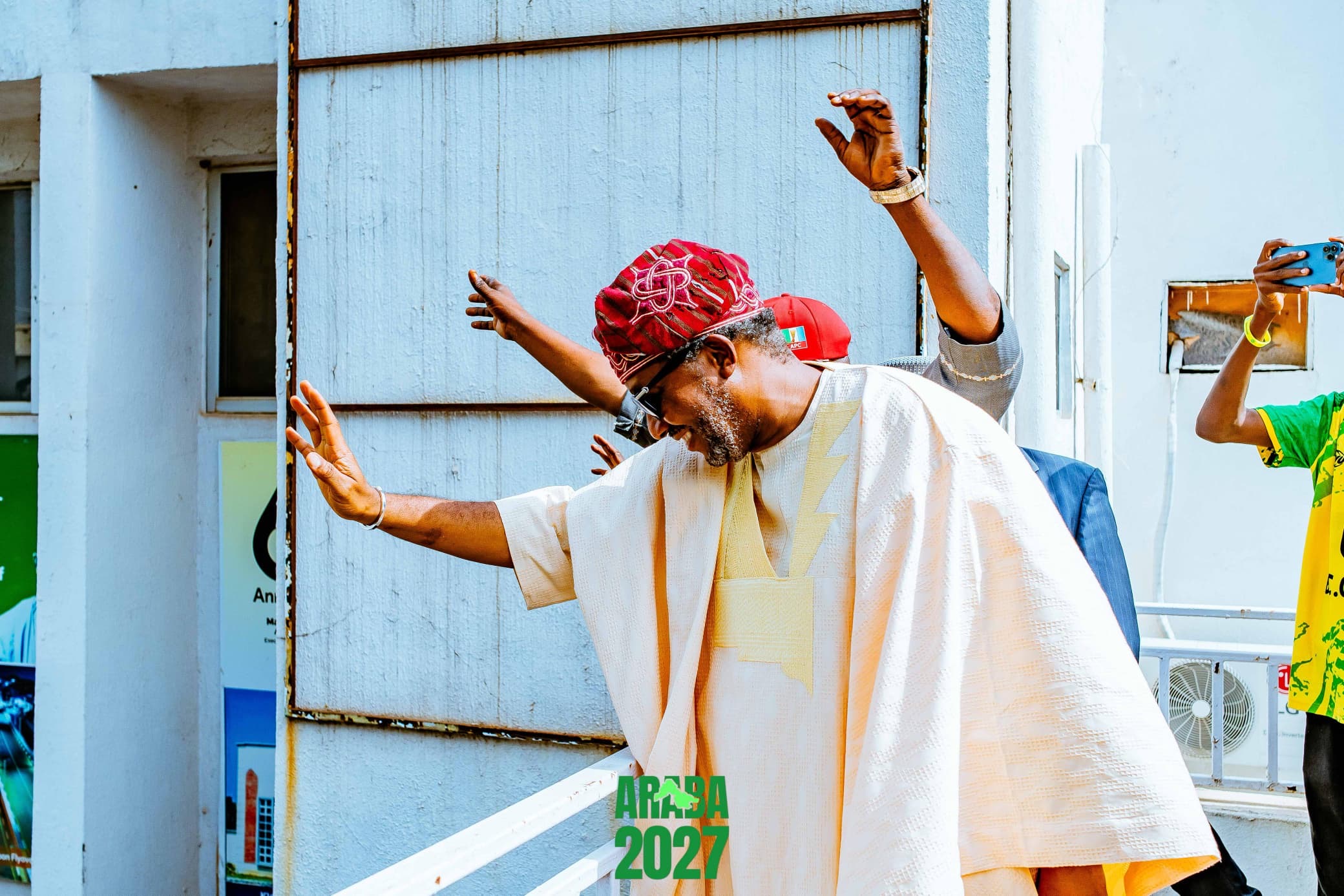
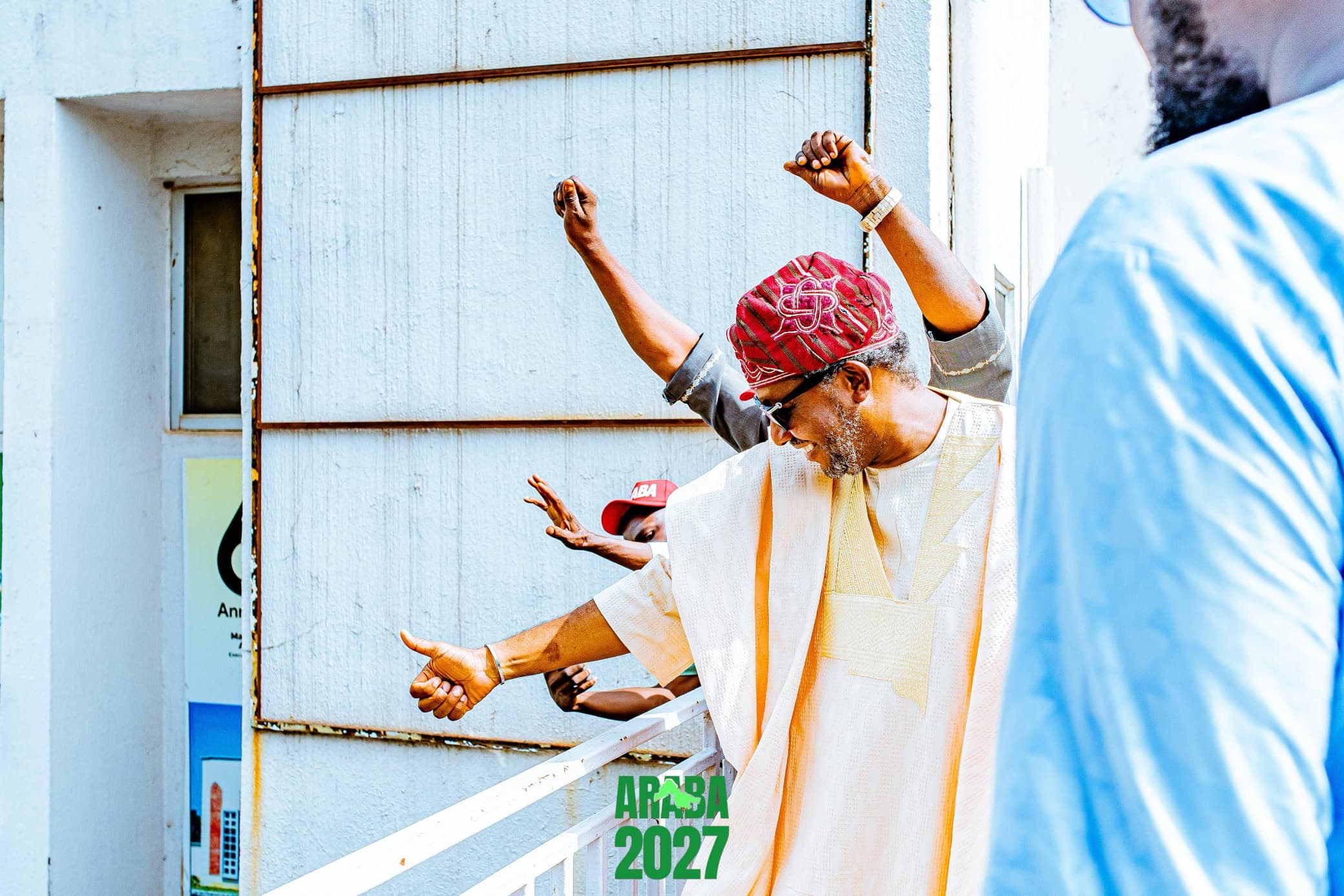
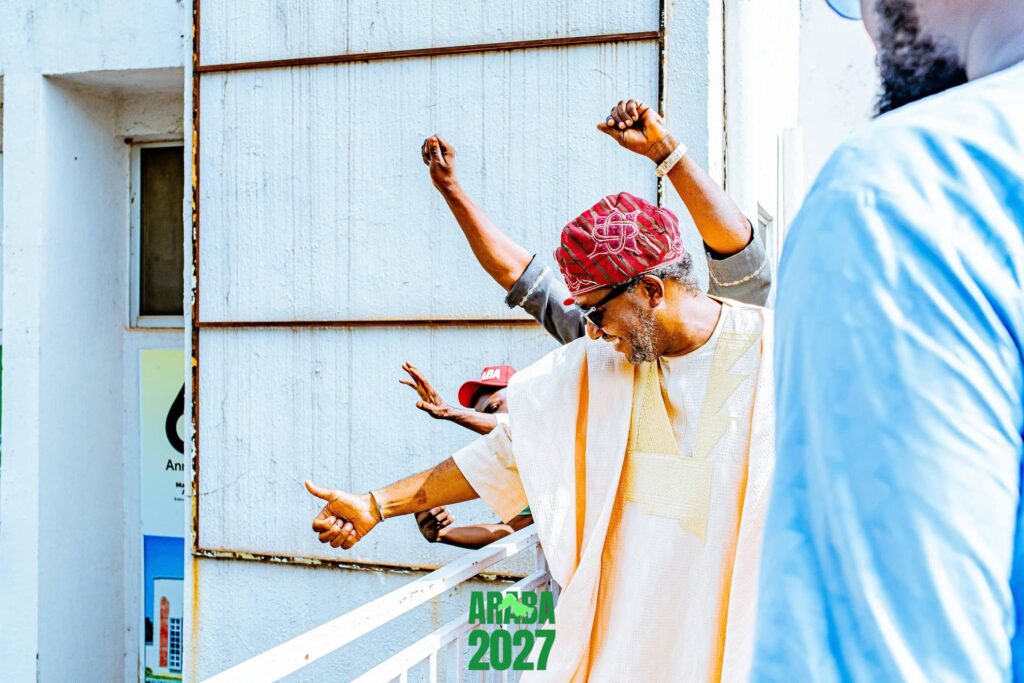
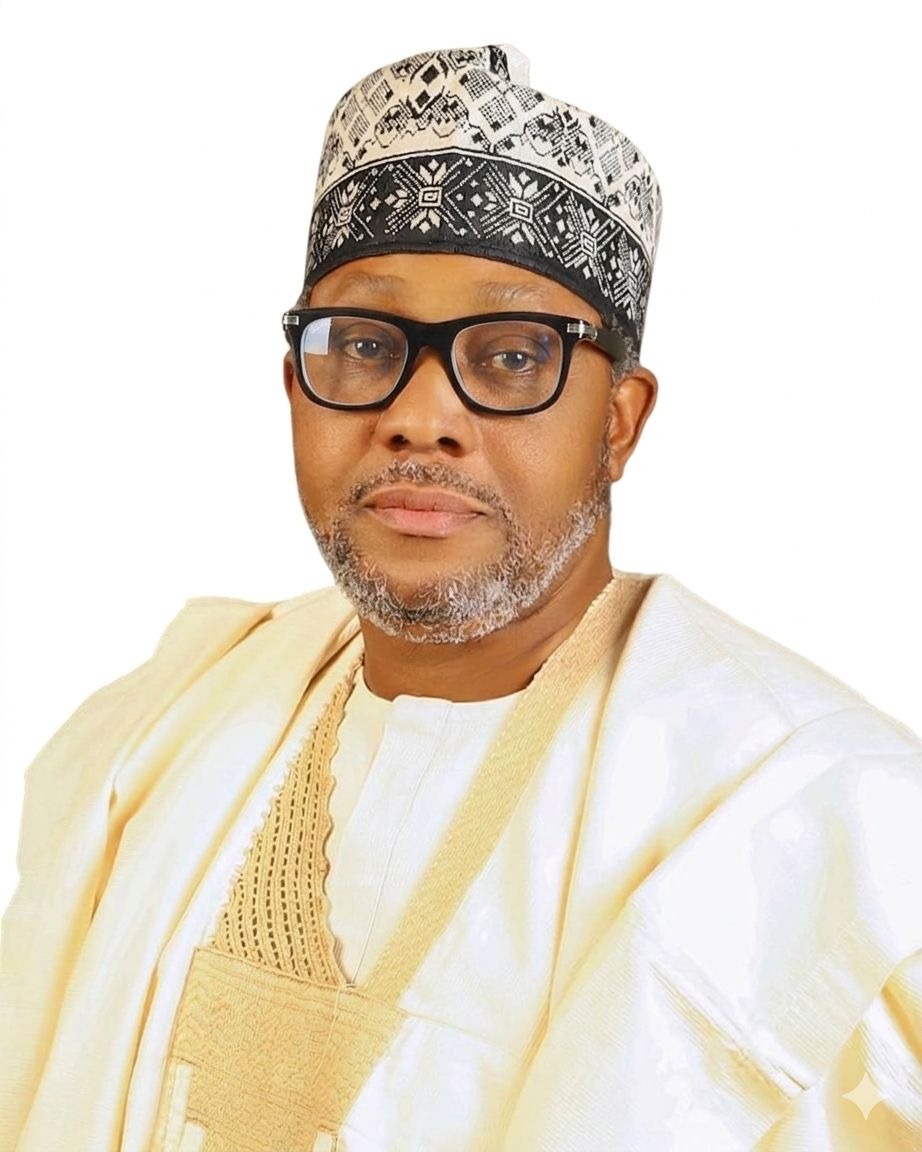
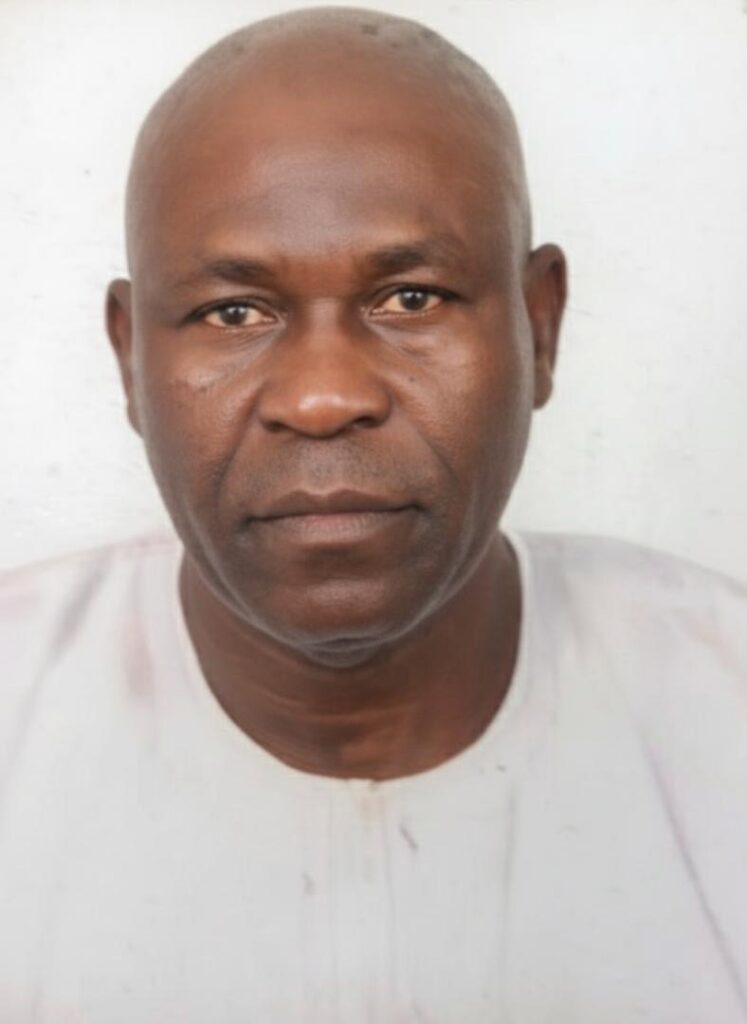
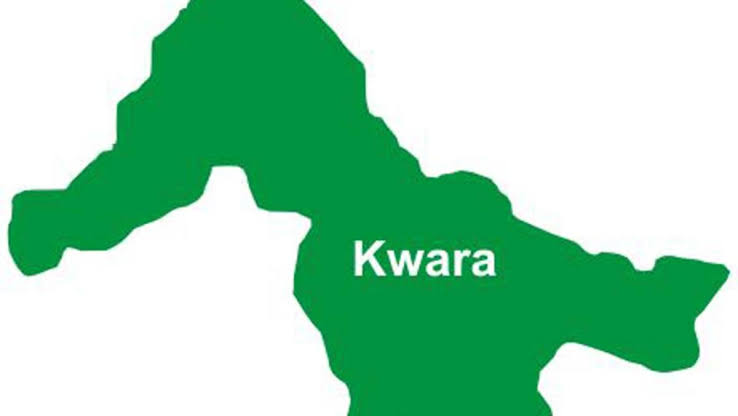
Engr. Femi Sanni fondly called ARABA by his friends and supporters took many by his strategic entrance into the Kwara 2027 governorship race. Sanni’s ambition to take over from Governor Abdulrahman Abdulrazaq started like rumors and later went viral to all 193 wards and 16 local government areas of Kwara State.
From Ilorin to Baruten to Offa back to Asa, everybody is echoing Araba. His support base in the All Progressives Congress (APC) is expanding daily as the party prepares for the governorship primary election.
While many mistaken Engr. Femi Sanni as a newcomer in Kwara politics but people conversant with tragetory of the progressive family can attest to his contributions for over two decades. He aspired for the House of Representatives in 2003 and also indicated to contest the Kwara governorship seat in 2019. These are veritable facts!
Who is the Femi Sanni dominating political space in Kwara. Sanni grew up in Ilorin. He attended Bishop Smith Primary School, Ilorin and proceeded to Government Secondary School, Ilorin for his secondary school education. He earned a Bachelor of Engineering in Civil Engineering from the University of Ilorin.
Upon graduation, he relocated to Canada in search of knowledge and opportunity to add value at higher levels. Sanni is a visionary entrepreneur and engineer whose career embodies the perfect blend of technical mastery, strategic innovation, and social impact. With his multi-sector expertise, Sanni is providing solutions and services in telecommunications, construction, insurance, media, and consulting.
He is the founder of TECHNOPlus, Stëfolga Group (a multi-functional holding company with interests in Oil and Gas, Engineering and the Properties) and Flow FM Radio in Ilorin.
The APC Governorship Aspirant who has secured endorsement of the Party’s stakeholders across three Senatorial districts sees politics as a tool for bringing meaningful change to society, state and the nation.
In his media interview many years ago, he said: “Politics, to me, is a tool for meaningful change. I have always believed that for society to thrive, people with integrity, experience, and outside-the-box thinking must step into leadership.
“For me, politics is not about power; it’s about helping people and making their lives better. I see politics as a way to bring real change. I believe we need honest, kind, and smart people to lead, just like what we are seeing now with President Asiwaju Bola Tinubu. I got into politics because I care deeply about Kwara State and its future.”
Interestingly, Araba has been adding value to the society before declaring his aspiration to become Kwara State Governor. He established Flow FM in Ilorin to create jobs, boost the state economy and promote culture heritage/values of his state.
Apart from that, he is also investing in grassroots sports development. His company- Stefolga Group and Flow FM recently signed fifty million naira (N50million) partnership deal with Kwara State Football Association for three-year sponsorship deal for the state’s federation cup. This is not a media optic but a way of giving back to his ‘first love’. Araba’s friends from the hood feel he inherited his passion for football from his father who managed the defunct Tate and Lyle FC in Ilorin.
Beyond enterprise, Femi’s influence extends to youth development and empowerment. He is deeply passionate about nurturing the next generation of African innovators and leaders, and has created platforms that amplify youth voices, promote digital inclusion, and inspire self-reliance.
In recognition of his consistent humanitarian activities across Kwara State, Engr. Femi Sanni received royal honor as the Otun Aare Soludero of Offa Land and Gbobaniyi of Obbo-Aiyegunle in Ekiti local government area.
As Kwarans continue the search for the next Governor, it’s safe to say Engr. Femi Sanni ARABA has reduced the stress of looking for a Visionary Leader. He is an embodiment of exceptional qualities to lead Kwara State to the next phase of development, following unprecedented achievements of His Excellency, Governor Abdulrahman Abdulrazaq. ARABA is indeed the Baba with capacity to lead APC to victory in 2027.
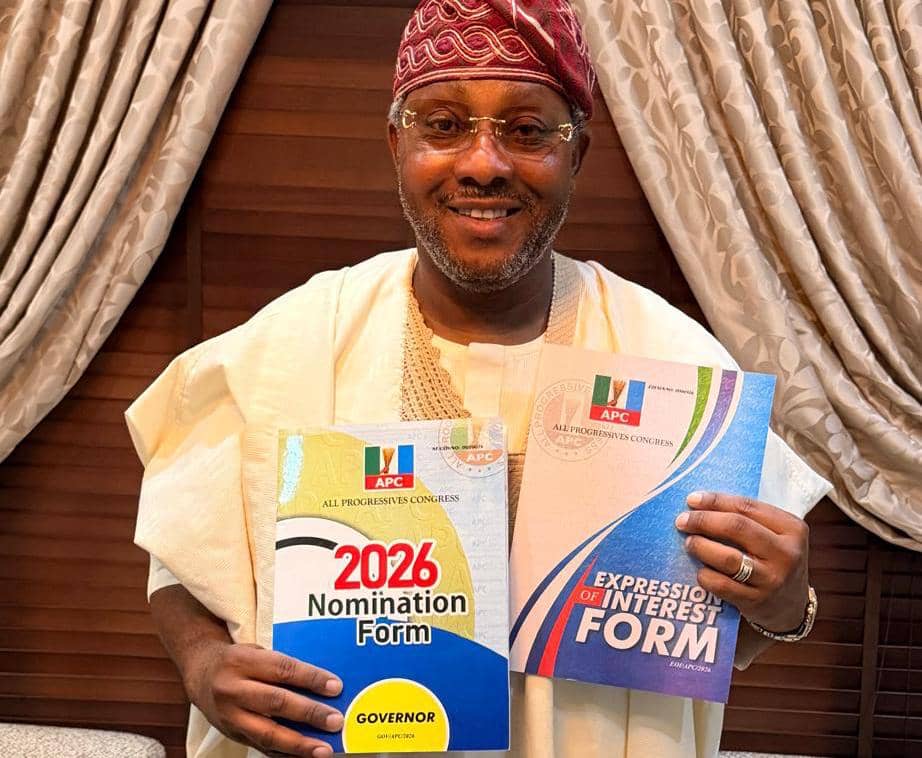
The journey to purposeful leadership begins with bold decisions, clear vision, and the courage to answer the call of the people. That defining moment has arrived as Engr. Femi Sanni, popularly known as Araba, officially picks his Expression of Interest (EOI) and Nomination Form for the gubernatorial race, signaling strong readiness to lead Kwara State into a new era of growth and development.
This significant step is more than a political procedure it is a declaration of preparedness, commitment, and confidence in the future of Kwara. It reflects a leader who understands the enormous responsibility of governance and is fully prepared to offer tested leadership built on competence, integrity, and service.
For years, Engr. Femi Sanni has remained a strong force in business, youth empowerment, media development, and grassroots politics. As Chairman of Stefolga Group and founder of Flow FM, he has consistently demonstrated leadership that creates opportunities, supports communities, and drives economic progress. His impact extends beyond politics into real-life solutions that have touched countless lives across the state.
By picking his EOI and Nomination Form, he has once again shown that leadership is not about mere ambition, but about responsibility and readiness. His aspiration is rooted in a vision of inclusive governance where every senatorial district North, Central, and South feels the presence of government and benefits from genuine development.
His supporters across Kwara have described this moment as timely and strategic. Many see him as a bridge builder, a unifier, and a practical leader capable of transforming governance from promises into measurable results. His popularity among youths, women, professionals, and grassroots stakeholders continues to grow because of his accessible style of leadership and his consistent commitment to people-centered progress.
Engr. Femi Sanni represents a generation of leadership that believes governance should drive industrial growth, youth employment, educational advancement, infrastructure renewal, and economic independence. His emergence in the gubernatorial race offers hope to many who desire a stronger and more prosperous Kwara.
The picking of the EOI and Nomination Form is therefore not just an announcement it is a statement that the race for 2027 has gained serious momentum.
Kwara deserves a leader with vision. Kwara deserves a leader with capacity. Kwara deserves a leader with proven results.
Engr. Femi Sanni has stepped forward.
The mission is clear. The people are ready. And the leader is prepared.
As the political landscape in Kwara State gradually shapes toward the 2027 gubernatorial election, one name continues to resonate strongly across the three senatorial districts Engr. Femi Sanni, popularly known as Araba. His rising political profile is not built on mere slogans or seasonal ambition, but on years of visible impact, strategic leadership, grassroots connection, and an unwavering commitment to the development of Kwara State.
In a time when citizens are demanding competence over propaganda and performance over promises, Engr. Femi Sanni stands out as a leader whose track record speaks louder than political rhetoric. His journey in leadership, philanthropy, youth empowerment, sports development, and community advancement has positioned him as one of the most credible and formidable gubernatorial aspirants for 2027.
A Leader with Vision, Capacity, and Results Leadership is not defined by title alone, but by the ability to inspire change, solve problems, and uplift people. Engr. Femi Sanni has consistently demonstrated these qualities through his engagements across sectors. His reputation as a builder of people and institutions has earned him respect among youths, party stakeholders, traditional leaders, and the general public.
Unlike many politicians who emerge only during election cycles, Araba has remained consistently connected to the people. His interventions in community development, support for young entrepreneurs, educational assistance, and social welfare programs have created real impact in the lives of ordinary Kwarans.
His leadership style reflects a deep understanding of governance not as a privilege, but as a responsibility to serve.
Champion of Youth and Grassroots Development One of the strongest pillars of Engr. Femi Sanni’s political strength is his deep rooted connection with the grassroots. Across local governments, communities, and wards, he is known as a man who listens, responds, and acts. His commitment to youth development is particularly remarkable. At a time when unemployment and lack of opportunities remain major concerns, Araba has continued to invest in empowering young people through mentorship, support systems, and opportunities for growth. His belief that the future of Kwara lies in the hands of its youth has guided many of his initiatives.
This is not politics for headlines it is leadership for lasting impact.
Transforming Sports, Inspiring Hope His recent landmark ₦50 million sponsorship of the Kwara State FA Cup through Stefolga Group and Flow FM remains one of the boldest private sector interventions in grassroots sports development in the state’s recent history.
This move was not just about football it was about hope, opportunity, and the recognition that sports can serve as a powerful tool for youth engagement, talent discovery, and economic empowerment.
By investing in sports, Engr. Femi Sanni demonstrated practical leadership and a clear understanding of how strategic interventions can create long term social benefits. It was a statement of vision, not mere charity.
A Bridge Between Experience and New Generation Leadership Kwara needs a governor who can combine experience with innovation, tradition with progress, and political wisdom with fresh energy. Engr. Femi Sanni represents that balance.
He understands governance, respects institutions, and values the importance of inclusive leadership. At the same time, he connects naturally with the younger generation who seek modern solutions to modern challenges.
His political maturity, administrative capacity, and people centered approach make him not just an aspirant, but a prepared leader ready for the responsibility of governing Kwara State.
Why 2027 Belongs to Araba The 2027 governorship election will not simply be about party structures or political calculations it will be about trust, competence, and who the people believe can truly move Kwara forward.
Engr. Femi Sanni has built trust through service. He has shown competence through results. He has earned loyalty through consistency. Kwarans are increasingly looking beyond conventional politics and asking critical questions: Who understands the people? Who has shown genuine commitment? Who can deliver beyond campaign promises? For many, the answer is becoming clearer Araba.
The Time for Tested Leadership Kwara State deserves leadership that is bold, visionary, and people driven. It deserves a governor who understands both the pain of the people and the pathway to progress.
Engr. Femi Sanni is not presenting himself as a candidate of empty promises, but as a leader whose work already reflects the future he envisions for the state.
His proven track record has shown he is not just capable he is ready. As 2027 approaches, the conversation is no longer about whether Araba is qualified. The real question is whether Kwara can afford to ignore the opportunity for tested, transformational leadership.
The answer, for many across the state, is simple: Engr. Femi Sanni (Araba) is the best man for the job.
The argument for any governorship candidate must begin not with the candidate but with the state. What does Kwara State actually need from whoever occupies Government House in Ilorin after 2027? What are the honest deficits that a new governor must confront? What kind of leadership profile, not rhetoric, but demonstrated character and capacity, does the scale of that task require? It is only by answering those questions first that the case for any particular candidate acquires weight.
Kwara is a state of considerable promise and persistent underperformance before the tenure of Abdulrazaq Abdulrahaman. Its geography places it at the meeting point of the North and South, giving it natural advantages in trade, logistics, and cultural exchange that few Nigerian states enjoy. Its land is fertile. Its people are educated, entrepreneurial, and politically sophisticated. And yet, for much of its modern history, Kwara has been governed as a political estate rather than a developmental project, a state whose potential has been subordinated to the interests of political patrons rather than its citizens.
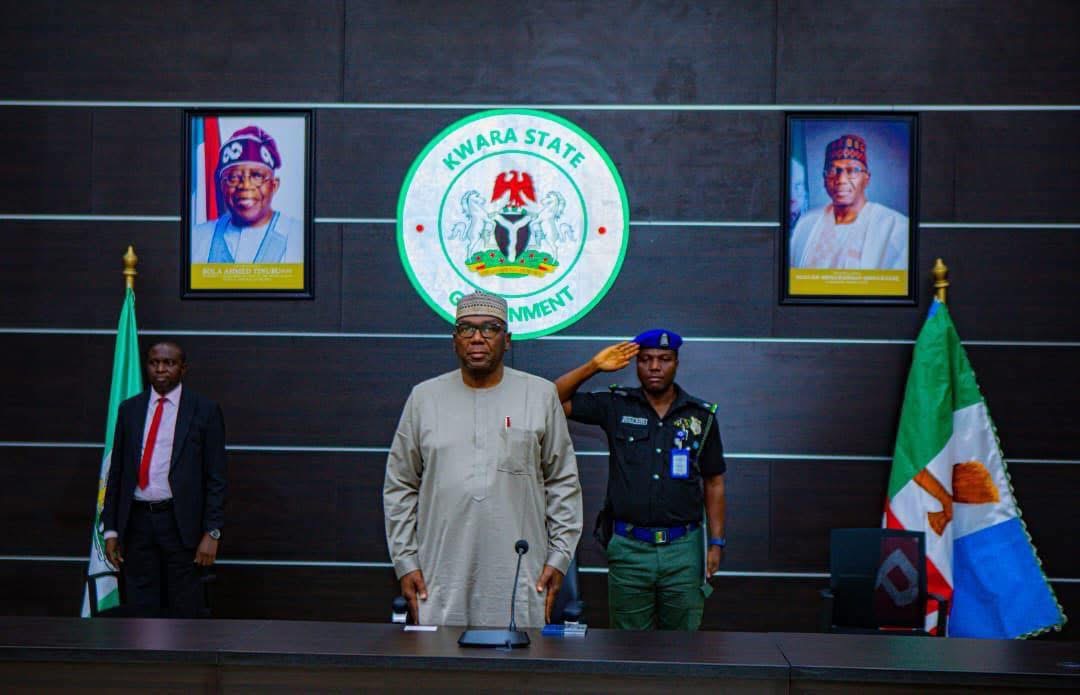
The current administration of Governor AbdulRahman AbdulRazaq has made credible progress in beginning to reverse that inheritance. Infrastructure is being delivered. The Ilorin International Conference Centre is taking shape. Governance has become more institutionalised. But the unfinished business is real and substantial.
That is the context in which the candidacy of Engr. Femi Sanni, known widely and affectionately across Kwara as Araba, must be assessed. And when assessed honestly, the case is compelling.
A Builder Before a Politician
One of the most persistent problems in Nigerian governance is the elevation of people who have never built anything to positions where they are expected to build everything. Governors who have never run a business, managed a payroll, navigated a competitive market, or created a job from nothing are handed the levers of a state economy and expected to produce results. The outcomes of that experiment are visible across the country.
Araba Femi Sanni is a different kind of candidate. He is, before anything else, an engineer and an entrepreneur with over three decades of active enterprise behind him. His Stafolga Group spans telecommunications, construction, insurance, media, and strategic consulting. He chairs Flow FM 92.7 in Ilorin, a media institution that has become embedded in the cultural life of the state capital. He founded Africa’s first mobile phone repair assurance company, a pioneering solution that recognised a gap in consumer protection within the continent’s rapidly expanding technology market and moved to fill it. This is not a man who arrived at enterprise through inheritance or political patronage. It is a man who built, failed, learned, and built again across multiple industries over multiple decades.
That background matters enormously in the context of what Kwara needs. The state’s fundamental economic challenge is not administrative in nature. It is structural. Kwara produces talent but exports it. It sits on agricultural land but captures little of the value chain. It occupies a strategic location between Lagos and the North but has not institutionalised itself as a logistics or commercial hub. These are problems that require someone who thinks like an entrepreneur, who understands investment climates, who can hold a conversation with a foreign investor as an equal rather than as a supplicant. Araba’s career has prepared him precisely for those conversations.
He has also been explicit about the economic vision he intends to bring to the governorship. After returning from a Nigerian-UK business conference held alongside events marking President Tinubu’s visit to Britain, Araba spoke publicly about positioning Kwara as a hub for conference and business tourism. He pointed to an observable and measurable indicator: the growing frequency of same-day return flights between Lagos and Ilorin, which he reads as evidence of rising business traffic and increasing investor interest in the state. This is not the language of a politician making promises for the crowd. It is the language of someone who watches economic indicators, who attends international business gatherings, and who thinks systematically about how to convert latent advantage into active development.
Youth, Inclusion, and the Investment That Precedes Power
There is a category of political aspirant who discovers youth empowerment at the moment they decide to run for office. The youth agenda becomes a campaign tool, deployed strategically during the election season and forgotten the moment the ballot is counted. Kwara’s voters, particularly its younger voters, have seen that pattern before. They can tell the difference between a candidate who is performing interest in young people and one who has actually spent years investing in them.
Araba Femi Sanni’s record on youth development predates his governorship ambition by many years. Through Araba Football Club, he has provided a structured platform for young athletes to develop their talent, compete, and build the kind of discipline that sport uniquely instils. Through Flow FM 92.7, he has created employment and opportunity for young broadcasters, journalists, and media professionals who might otherwise have had to leave Kwara to find comparable platforms in Lagos or Abuja. He has spoken often about his father’s management of the defunct Tate and Lyle FC of Ilorin, a family heritage of investment in sporting communities that shaped his own philosophy. This is not performance. It is inheritance acted upon.
The response from Kwara’s youth has been telling. When the Kwara Youth for Good Governance coalition, drawing members from across all 16 local government areas of the state, gathered to endorse Araba’s candidacy, their convener, Salman Idris, was careful to frame it in terms that cut through the noise of ordinary political endorsements. He said the decision was based on evidence, not emotion. He described Araba as a candidate whose track record aligns with the expectations of a younger and more politically conscious demographic. Over 2,000 young people from across the state attended that event, arriving before the scheduled time and filling the Arca Santa event centre in Ilorin to affirm their support. That is not a crowd manufactured by money. That is a crowd manufactured by credibility.
Araba’s commitment to inclusion also extends beyond youth. He holds chieftaincy titles across multiple communities in Kwara, including Otun Maiyegun of Kishi, Otun Aare Soludero of Offa Land, and Gbobaniyi of Obbo-Aiyegunle. These are not honorary decorations. In the context of Kwara’s complex inter-community dynamics, they represent relationships of trust and recognition built over time across the state’s diverse geographies. When Araba says he entered this race after wide consultation across all three senatorial districts, the social architecture behind that claim is visible. He is not a candidate of one zone, one faction, or one interest bloc. He is a candidate whose networks, built through enterprise and community engagement rather than political calculation, span the breadth of the state.
Continuity with Acceleration: The Lagos Model Applied to Kwara
One of the most thoughtful arguments Araba has made in the public discourse around the 2027 succession is his invocation of what he calls the Lagos model. He argues, correctly, that the most durable political success story in contemporary Nigerian governance is not the one-off transformational governor who arrives, performs brilliantly, and leaves behind an administration that squanders his legacy. It is the system of governance continuity built in Lagos over successive APC administrations, where institutional progress compounds over time because each governor inherits and builds on the work of the one before, rather than dismantling it to make room for a personal brand.
Kwara is at a moment where this principle is directly applicable. Governor AbdulRazaq has laid what Araba himself has publicly described as a new benchmark for governance in the state. The challenge for the next governor is not to restart from scratch, which would squander momentum, but to take what has been built and move it to the next stage of ambition. Araba has been unambiguous about this: he sees his role as a consolidator and accelerator, not a revisionist. In a political culture where incoming governors often reflexively undo the work of their predecessors to establish identity, this posture is itself a form of maturity.
The acceleration Kwara requires is primarily economic. The state’s IGR must grow substantially to reduce the dangerous dependence on federal allocations that leaves every budget cycle vulnerable to the fluctuations of oil revenue. The conference and business tourism strategy Araba has outlined is one credible lever for this. Ilorin has geography, infrastructure investment under the current administration, and a social environment that makes it a realistic candidate for mid-tier conference hosting. The Ilorin International Conference Centre, when completed, will be an anchor asset. The question is whether the next governor will have the business acumen and international connectivity to fill that centre with paying delegates from the private sector, from professional associations, from international organisations. Araba, who personally attends Nigerian-UK business conferences and understands how investment decisions are made, is better equipped for that conversation than most.
His position on security also reflects the kind of thinking that goes beyond electoral platitude. When bandits attacked the Isapa community in Ekiti local government area of Kwara, Araba did not simply offer condolences and move on. He called directly for the acceleration of state police legislation, arguing that the federal security architecture is structurally inadequate for the granular, community-level threats that Kwara and other states now face. He said no community in Kwara should live under the constant threat of violence and fear, and he backed that statement with a policy prescription: constitutional and legal reform of the security architecture that gives states real capacity to protect their own people. This is a serious position, held by a serious man, and it distinguishes him from those who treat security as a backdrop for sympathy rather than a domain for governance innovation.
The Argument for Araba, Plainly Stated
Let this argument be made as plainly as possible for those who approach the 2027 Kwara governorship race without prior commitment to any candidate. The question is not who has the longest political biography or the most powerful godfather. The question is who is most likely to look back in 2031, after four years in office, and have genuinely moved the needle on the things that matter to ordinary Kwara people: jobs, roads, schools, hospitals, security, and a state that is attracting investment rather than exporting talent.
Araba Femi Sanni offers a profile that maps directly onto those requirements. He has built businesses across multiple sectors, which means he understands what entrepreneurs need from a state government: predictable regulation, infrastructure that works, and an administration that treats investors as partners rather than subjects. He has invested in youth development through sport and media for years before the first campaign billboard went up, which means his commitment to young people has been tested and demonstrated rather than merely declared. He has cultivated relationships across all three senatorial districts of Kwara through a combination of cultural recognition, community engagement, and consistent presence, which means a Sanni administration would not be the governorship of a faction but of the full state.
He also brings something that is harder to quantify but no less important: intellectual honesty about what governance requires. He has said publicly that leadership must be anchored on competence, a proven track record, integrity, and inclusiveness. He has invoked the Lagos succession model not as flattery toward President Tinubu but as a genuine framework for what durable state-level progress looks like. He has contested before, first for the House of Representatives in 2003 and later for the governorship in 2019, absorbing the defeats and continuing to participate in Kwara’s political life out of conviction rather than retreating in disappointment. The man has been tested by failure and continued anyway. That is not a small thing.
Kwara is not a state that can afford another cycle of governance by improvisation. It needs a governor who arrives on day one with a coherent economic strategy, a track record of building institutions rather than simply inhabiting them, and the personal relationships across the state’s communities to govern inclusively rather than sectionally. It needs someone who has already demonstrated, outside of government, the values they claim they will bring into it.
The neutrals who read this and ask what separates Araba Femi Sanni from the field deserve a direct answer. What separates him is that his credentials are not political. They are real. His businesses exist. His football club exists. His radio station exists. His workers draw salaries. His community relationships are documented in chieftaincy titles conferred by different peoples across different parts of Kwara. His international exposure is visible in where he goes and who he engages when he travels. You can test all of this independently of anything his campaign team will tell you.
Nigeria has a long and painful history of electing people who were impressive on paper and then watching them fail in office because the qualities required for political success turned out to have nothing to do with the qualities required for governance. The antidote to that pattern is not to abandon ambition but to select leaders whose pre-political lives actually demonstrate the capacities that governing demands. Araba Femi Sanni is that kind of candidate.
Kwara deserves a governor who built something before he sought to govern something. Who invested in its young people before he needed their votes. Who studied its economy and its position in the regional and national business landscape before he commissioned a campaign poster. Who has crossed the lines of zone, faith, and community through decades of genuine engagement rather than through a pre-election tour. Who came back from a trip abroad talking not about pleasantries exchanged with dignitaries but about the specific economic opportunities those conversations opened for his home state.
The 2027 election in Kwara is not yet decided. The field is not yet finalised. Many conversations remain to be had within the APC, within the broader political community, and among the people of the state. But the case for Araba is not merely a campaign argument. It is a governance argument. And governance arguments, properly made and properly heard, tend to hold their ground.
Kwara does not need another politician who wants to govern. It needs a builder who is ready to.
Before Abdulrahman Abdulrazaq stepped into office as Kwara Governor, Ilorin wore the look of a quiet city waiting to be noticed. COVID 19 hit it badly.
The airport, in particular, told a familiar story, one of hesitation and neglect. Daily flights? That was a luxury the state could hardly boast of.
Back then, the economy simply didn’t have the muscle to sustain the kind of business and social buzz that keep airlines interested. Operators came, looked around, did the math and quietly stayed away.
For those who dared, it was a gamble. Only one airline kept the route alive, and even then, flights were anything but reliable.
Then came Abdulrazaq, and with him, a shift in tempo.
Rather than patching symptoms, his administration went for the roots. Moribund companies got a second look, key sectors like education, health, and agriculture were confronted head-on, and infrastructure became more than a talking point, it became a mission.
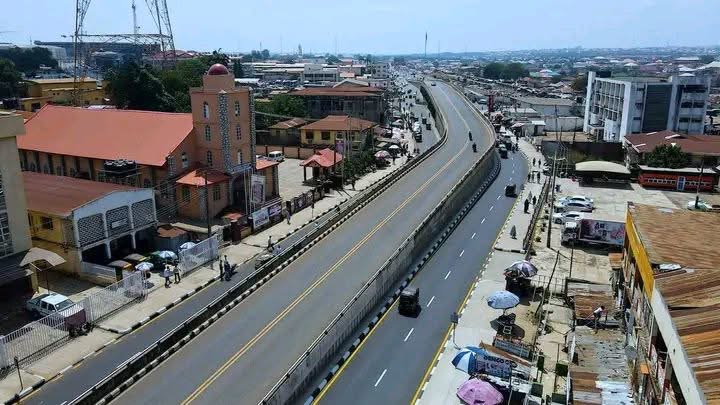
Roads stretched smoother across the city, new structures began to rise with confidence, and urban spaces started to breathe again.
Slowly but surely, Kwara found its rhythm.
Today, the story has changed. Insecurity is a concern in some border areas but generally life is better than it used to be. Activities in Ilorin say a lot about the renewed economic pulse of the state. The city is no longer waiting to be discovered; it is announcing itself.
Across Kwara, there’s a visible transformation. Roads don’t just connect, they impress. Architecture isn’t just functional, it inspires. Public spaces are gaining character, and empowerment programmes are weaving governance into the daily lives of the people. For many indigenes, politics aside, there is a growing sense of pride in what is unfolding.
Behind the scenes, key figures are driving this machinery. Aminat Ahmed El-Imam oversees the health sector, while Lawal Olohungbebe steers education. Their efforts, alongside others, form the backbone of the administration’s broader agenda.
To get a closer look at these developments, we spoke with Abdulquawiy Abdulganiyu Olododo, a prominent APC chieftain and commissioner for works in the last week of March. During the interview, he offered insights into both the strides and the struggles of governance under Abdulrazaq.
In this edition, we bring you images and excerpts from Olododo’s reflections on infrastructure development over the past seven years, what he describes as bold, far-reaching, and in many ways unprecedented since the creation of the state. In a conversation with Saturday Editor Onochie Anibeze and Demola Akinyemi, Olododo lays out what he believes are the defining infrastructure achievements that have carved Abdulrazaq’s name into Kwara’s history.
Education and health will take the spotlight in subsequent editions. For now, the focus is clear: This is part of Kwara’s infrastructure story told through the eyes of a man who has watched it unfold, brick by brick, road by road.
What was the state of infrastructure and roads in Ilorin and indeed Kwara state about seven years ago,when Governor AbdulRahman AbdulRazaq was sworn in as the governor and what is it like now?
When His Excellency, Governor AbdulRahman AbdulRazaq, assumed office in 2019, the condition of our road infrastructure was frankly deplorable. Many critical routes had collapsed, township roads were neglected, and several communities were practically cut off.
The administration had to begin with emergency interventions just to restore basic mobility.
Today, the difference is clear and measurable. We have transitioned from just repairs to a structured, statewide infrastructure programme. Across Kwara, we have completed 330.77km of kilometres of roads, with 257.96km ongoing, spanning urban renewal, rural access, and major connecting Local Government corridors. What you see today is not just road construction, it is a deliberate rebuilding of the state’s economic backbone.
In the past seven years, what would you describe as the most significant milestones your ministry has achieved in road construction and infrastructure development?
The most significant milestone over the past seven years would be the scale and structure of the work done. His Excellency has embarked upon more road infrastructure than the combined previous administrations since 1999, (882.73km) including the Federal Government Tax credit scheme intervention. But beyond numbers, we have changed the philosophy, from isolated projects to a coordinated development agenda.
A major highlight is the Rural Access and Agricultural Marketing Project (RAAMP), which connects farming communities to markets. The Governor was also able to facilitate a strategic intervention to achieve a ring road for the State through the innovative Tax credit scheme of the Federal Government spanning over 290km of road. So the milestone is not just roads, it is connectivity, productivity, and long-term planning.
Can you provide insights into the number and scale of projects completed under your leadership, and how these have impacted economic growth and connectivity across the state?
We are looking at hundreds of kilometres of roads across the state, completed, ongoing, and facilitated through partnerships.
To properly break it down, we have 330.77km of road already completed, 257.96km ongoing, including the 209.77km of the RAAMP project, and also the 294km of the Federal Government intervention he facilitated is also ongoing with about 72km of it completed as we speak. At different points, we have handled well over a hundred projects simultaneously across the three senatorial districts. These range from urban renewal road projects in Ilorin to township roads across the state, to strategic rural roads and major economic corridors. We have also completed over 200 interlocking projects across several communities in Kwara State. The very first of its kind in the history of kwara state.
These interlocking projects were introduced to serve communities that have been deprived of road network since the creation of the state, and now they are accessible. Also, places that were swamped with water, muddy neighborhoods, now wear a new look, accessible, and cleaner due to the interlocking projects.
The impact of these projects have been profound, from reduction in travel time across key routes, to Improved access to markets for farmers, to Lower transportation costs, to Increased commercial activity, etc. Infrastructure is the foundation of economic growth, and we are already seeing those benefits materialise across Kwara.
What innovative strategies or policies has the ministry introduced to improve project delivery, quality, and cost efficiency during this period?
For smooth project delivery and quality, we have deployed a system that allows the leadership of the ministry have a real time update on all awarded projects being supervised by our qualified Resident Engineers, we have also invested in the training and retraining of all our engineers to ensure they are up to date with the required exposure necessary to match the 21st century demand, and our ambition with infrastructure development in the State.
Second, we have a diversified funding sources, combining state resources, development partner support, and intervention model like the tax-credit financing.
Third, we emphasised value for money delivery ensuring that projects meet standards without unnecessary cost inflation.
How has your ministry addressed challenges such as funding constraints, contractor performance, and maintenance of existing infrastructure?
These challenges you’ve mentioned are real, but with the kind of leadership we have in Kwara today, we’ve been able to manage the challenges with discipline, structure, and tunnel.
On funding, we prioritised projects and leveraged partnerships to stretch resources further.
On contractor performance, we insist on strict adherence to specifications and timelines. Accountability is key.
On maintenance, we moved away from ad-hoc repairs to a system-driven approach, it’s why you are also seeing the massive rehabilitation and upgrades of most of our roads.
The goal is simple: every kilometre of road must deliver long-term value to the people. In what ways have your projects improved the daily lives of citizens, particularly in rural and underserved communities?
The impact of these projects is very real and very human.
In our rural communities, these are not just roads, to them, it means;
Farmers getting produce to market without losses
Easier access to healthcare and education
Lower transport costs
Improved quality of life
While for the urban residents, it means reduced traffic stress, better drainage, safer roads, aesthetically pleasing environment, and a more vibrant business environment. We fully understand Infrastructure is not just concrete and asphalt, it is dignity, opportunity, and inclusion.
You must be the lucky ministry going by the massive works your ministry is doing. Do you agree with this? And looking back, how proud are you about the things the govt of Abdulrahman Abdulrazaq has achieved?
I would not describe us as merely lucky, I would say we have been privileged to work under a governor who made infrastructure a serious development priority and backed that priority with political will. Road development at this scale does not happen by chance. It requires vision, budgeting, institutional discipline, follow up, and the readiness to think outside the box as funds required for these level of developments go beyond the regular budgetary allocations. It’s where the RAAMP and FG Intervention comes to play.
Personally, I would say I am proud because the achievements are visible and measurable.
When official figures show that this administration has exceeded the combined road records of the previous three administrations, that says something important about ambition and execution.
Beyond the numbers, I am proud that the works have touched all three senatorial districts and have begun to reposition Kwara from a largely salary dependent state to one that increasingly thinks in terms of productivity, connectivity, agribusiness, tourism, and investment.
To put it in proper context, we have completed 113.57km of roads in Kwara Central, while 65.5km are ongoing, totaling 179.07km in Kwara central. In Kwara South, 117.74km of roads have been completed, while 96.19km are ongoing, totaling 213.93km. In Kwara North, we have completed 99.46km, while 96.27km are ongoing, totaling 195.73km. Also, of the 294km of the Federal Govt. Tax credit scheme intervention, 252km of it connects the Kwara North senatorial district upto the border of Kwara with Benin republic through Baruteen LGA, while the 42km left connects Kwara Central to Kwara South senatorial district.
What legacy projects or reforms would you say will have the most lasting impact, and how do they position the state for future development? The AA govt appears to have made things easy for the next APC governorship candidate in Kwara. Your parting words on this!
The most enduring legacies, in my view, are not just individual roads but the systems and strategic corridors we are leaving behind. From the road network of high impact corridors across the state, especially the rural access roads and the facilitated tax-credit road projects that will improve internal and interstate economic movement. Also, is the broader urban renewal and infrastructure agenda, which has changed the development conversation in Kwara from managing decline to planning growth.
Politically, when people can see and feel the impact through roads, infrastructure, and improved livelihoods like we are witnessing in Kwara State today, then naturally it builds confidence in continuity. My parting words would be that the most important thing is not the ease of politics, but the continuity of progress.
Kwara has seen what focused leadership can achieve, and the task ahead is to deepen that progress, protect the reforms, and keep development people-centered
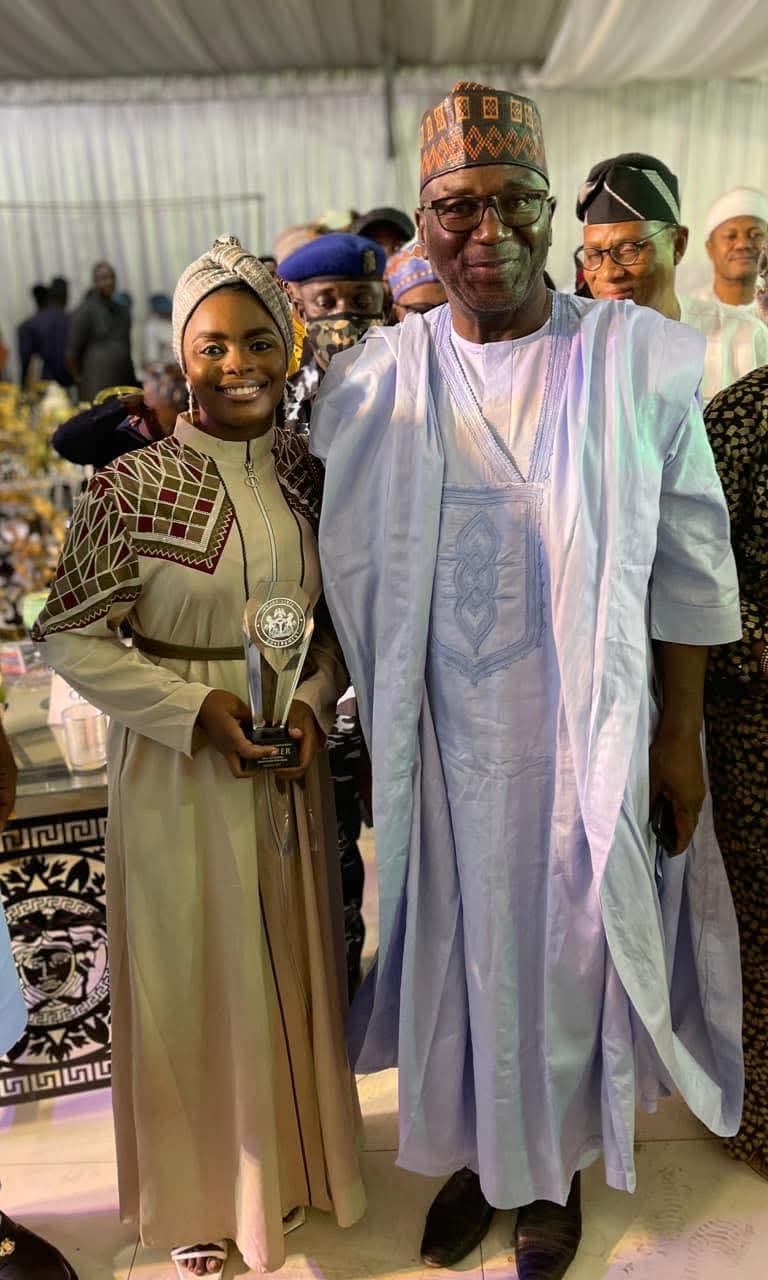
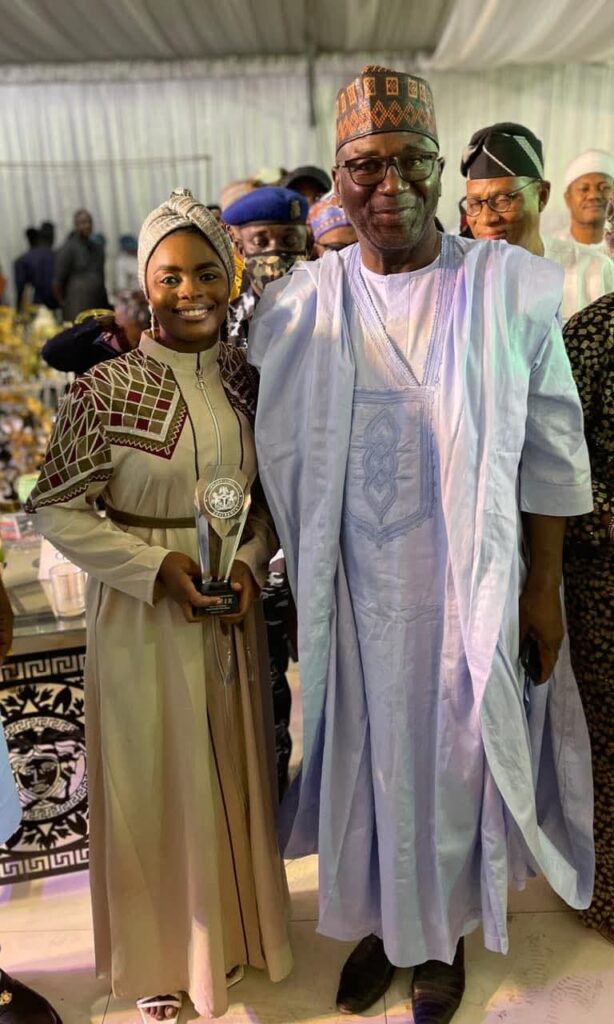
2022 was the year Kwara recognised my work under the administration of His Excellency, Mallam AbdulRahman AbdulRazaq(CON). At the Kwara State Government Dinner and Awards, I was honoured as Best Media Personnel in Kwara State—a milestone that validated years of promoting, portraying, and helping structure how government work reaches the people. The night was a magical one—lights, laughter, colleagues and mentors in one room—and the feeling that the path to more prosperity will come with ease settled in my chest and hasn’t left.
To every young person reading this: your dreams are valid. I never imagined receiving such a prestigious acknowledgement from my home state, and that recognition convinced me there is a level playing field for anyone willing to strive under this administration. Four years on, the aura of that evening still feels fresh, like a recent memory rather than a distant plaque on a shelf. Looking back makes one thing clear: I’m capable of driving organic, impactful engagements in Kwara and beyond—and the runway ahead is open. The shared dream is achievable; we can build it in layers—community by community, story by story—until the small rooms we started in become platforms that carry others.
To my fellow media professionals, thank you for your unwavering support over time. Your camaraderie, your critiques, your late-night edits and early-morning shoots—those are the invisible scaffolding behind any public recognition.
His Excellency, Mallam AbdulRahman AbdulRazaq (CON), thank you for the recognition and for creating the space for merit to be seen and rewarded. Your administration’s emphasis on opportunity and performance gave my work a stage; I’m grateful for the trust and for an environment where effort can translate into impact.
As the chess master reminds us, we can achieve Greater things from a Small Place—and Kwara is proof.
In February 2026, the Nigerian Navy was recognised by the Global Firepower Index as the African Navy with the strongest fleet. February 2026 also marked one year since Nigeria entered into a historic agreement with the African Union, for the Nigerian Navy to provide strategic sea-lift services to the AU’s peacekeeping, disaster response, humanitarian aid, and personnel movement operations across the continent.
Similarly, March 2026 marks four years since Nigeria officially exited the International Maritime Bureau’s list of piracy-prone countries. And then in June 2026, the Nigerian Navy-led Gulf of Guinea Combined Maritime Task Force (CMTF) will take off, coinciding with the Navy’s 70th anniversary.
The new Force is a landmark, ready-to-deploy, multinational force capable of rapid, coordinated regional maritime security responses, with the objective of tackling the complex security threats in the Gulf of Guinea. A Nigerian Navy officer is already serving as its pioneer commander.
All of the above, along with other maritime security successes and milestones championed by the Nigerian Navy – including the establishment in 2025 of the Nigerian Navy Marine Corps and the Nigerian Navy Special Operations Command (NNSOC) – did not happen by accident. They have all been the product of deliberate effort, vision, and leadership, under successive Chiefs of the Naval Staff.
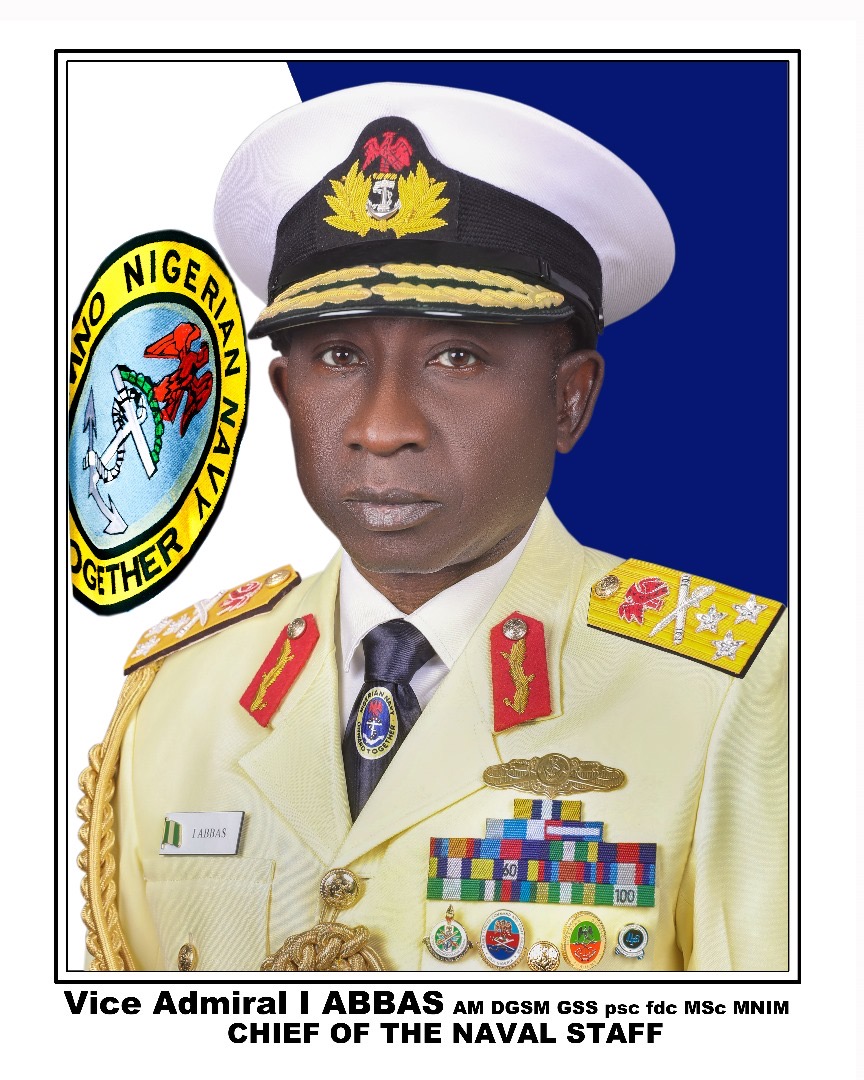
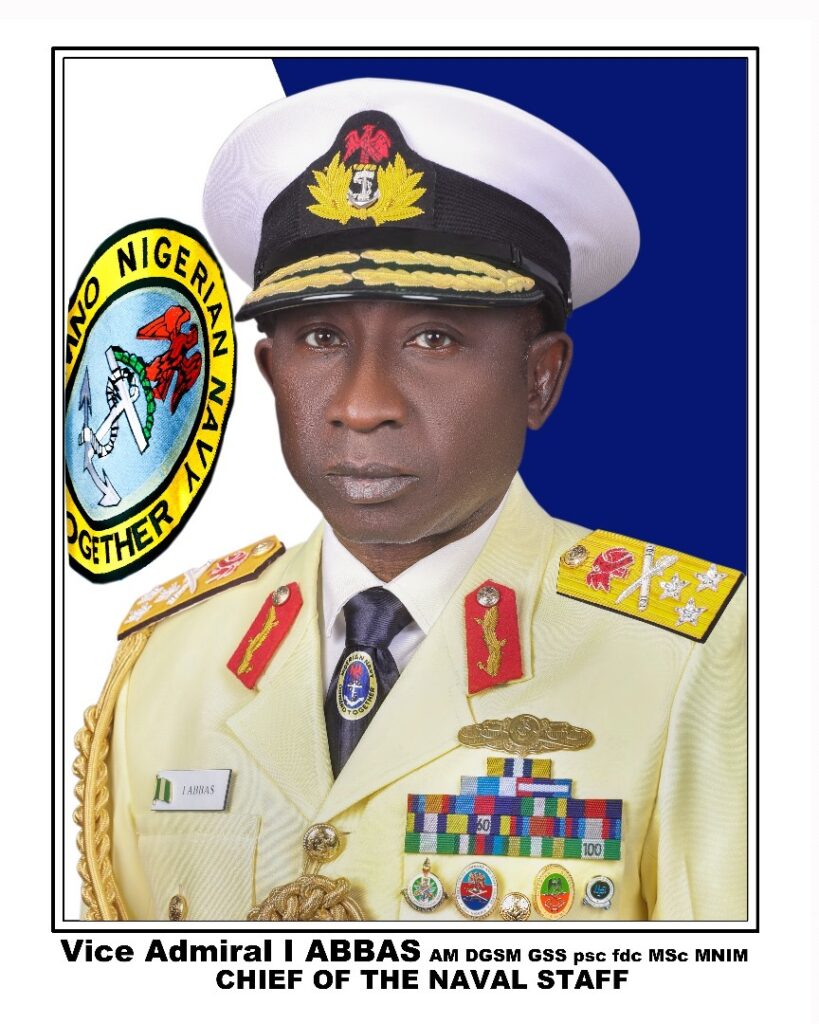
The vision of the incumbent Vice Admiral Idi Abbas, a decorated Above Water Warfare (AWW) specialist who assumed office as Nigeria’s 25th Chief of the Naval Staff on October 30, 2025, is “to develop a modern, agile, and professional naval force dedicated to securing Nigeria’s maritime interests and advancing national security objectives in synergy with other security agencies.”
From operational engagements to strengthening local and international partnerships, the new Navy Chief has demonstrated his resolve to build upon a proud and storied legacy that turns seventy this year. His very first official visit was to Makurdi, where the Nigerian Navy’s newest formation, the Special Operations Command, is taking shape on the banks of the River Benue. Vice Admiral Abbas stated that the choice of Makurdi as first port of call was deliberate, given the strategic role the new Command will play in tackling security challenges in the North Central region.
The Nigerian Navy is active across the length and breadth of the country, playing major roles in various internal security operations in no fewer than 30 States. In the Northeast, the Naval Base Lake Chad in Baga, Borno State, has become a vital hub in the anti-insurgency campaign. Vice Admiral Abbas visited the base on New Year’s Day 2026 to spend time with troops and to reflect on ongoing successes that have helped open critical waterways and bolster the livelihoods of farmers, fishermen, traders, transporters, and other residents.
The new Naval Chief has also taken international engagements to a new level, demonstrating a clear understanding of the role of multilateral cooperation in ensuring national, regional, and continental security. In January 2026, he led a delegation to the Doha International Maritime Defence Exhibition and Conference, hosted by the Qatar Armed Forces. In February, a Nigerian Navy delegation visited Egypt for a bilateral engagement with the Egyptian Navy, focused on deepening cooperation across training, and operational and technical capacity, with a return visit from the Egyptian Navy planned for April 2026. In March, the Navy received visits from the United States Special Operations Commander for Africa, and the Danish Ambassador to Nigeria, among others.
Prior to his appointment as Chief of the Naval Staff, Vice Admiral Abbas served as a Senior Research Fellow at the Nigerian Army Heritage Centre in Abuja – a testament to his intellectual inclinations. This came further to the fore in a lecture he delivered to Course 34 participants at the National Defence College, Abuja, in February, titled “Maritime Power and National Security: The Nigerian Navy in Perspective.”
Vice Admiral Abbas has stressed his determination to ensure that the Navy’s mission and vision are in full alignment with President Bola Ahmed Tinubu’s Renewed Hope Agenda. Among his stated priorities for the year ahead is the intensification of Nigerian Navy efforts to sustain and grow Nigeria’s oil production through increased patrols and surveillance.
Over the last two years, Nigeria’s average daily oil production has grown by over 300,000 barrels per day, with the Navy playing a significant role in that achievement. As Vice Admiral Abbas highlighted in his National Defence College address, Nigeria’s maritime environment – one of the most fertile hydrocarbon regions in the world – contributes approximately 8 percent to national GDP and accounts for 77 percent of total exports. The stakes, in other words, could hardly be higher.
As 2026 gathers momentum, it promises to be a landmark year for the Nigerian Navy – the platinum anniversary in June, which will be one of the defining moments of Abbas’ tenure. Among the highlights of the weeklong celebrations will be the formal take-off of the Gulf of Guinea Task Force. There will also be the sixth edition of the Sea Power for Africa Symposium, as well as an International Fleet Review presided over by Nigeria’s Commander-in-Chief, President Bola Ahmed Tinubu, GCFR.
In all, this anniversary will be a fitting stage for Africa’s leading Navy, and for an Admiral widely regarded as a welfare-oriented, people-centric leader – one who has hit the ground running and shown, in the early months of his command, outstanding vision and purposeful resolve.
As conversations around the 2027 governorship election in Kwara State slowly gather momentum, a curious narrative has begun to circulate: that the Ilorin Emirate faces a difficult political dilemma because two of its prominent sons may eventually contest the same office from different political platforms.
It is an argument that sounds dramatic at first hearing. But on closer examination, it appears more like an oversimplification of a far more complex political landscape.
The claim essentially suggests that the Ilorin Emirate could find itself emotionally torn between Senator Saliu Mustapha of the ruling APC and Engr. Suleiman Bolakale Kawu of the PDP, two respected sons of the Emirate whose names are increasingly mentioned in conversations about the 2027 race.
Both men undoubtedly command respect. Both are known within the Emirate’s social and political circles, and both have built reputations through public service and philanthropy. But reducing the political future of Kwara State—or even that of Ilorin Emirate itself—to a supposed clash between just two personalities stretches the argument beyond what the political reality supports.
Kwara politics has never been that narrow.
If anything, the attempt to frame the coming contest as a “two sons” dilemma ignores the fact that the Ilorin Emirate has historically produced multiple political actors at the same time, many of whom have competed vigorously within and across political parties without turning such contests into communal crises.
For instance, where does one situate the political weight of Yahaya Seriki, the Ajia Balogun of Ilorin and a well-known grassroots mobiliser within the APC? How should the experience of Moshood Mustapha, a former federal lawmaker with longstanding involvement in Kwara’s political evolution, be placed within this conversation? And what of Ali Ahmad, whose tenure as Speaker of the Kwara State House of Assembly positioned him as a notable figure in the state’s legislative and political landscape?
These are all Ilorin sons with recognisable political structures, influence and ambitions of their own. Their existence alone complicates the simplistic narrative that the Emirate is about to be forced into choosing between only two options.
Beyond these names skirting the race as it were, there are also persistent whispers within political circles about additional aspirants—some respected technocrats and political actors from Ilorin—who may yet enter the race as the political season unfolds. In contests of this nature, so-called dark horses are never entirely out of the equation. They often emerge quietly before suddenly reshaping the dynamics of the race.
Seen in this broader context, the notion of a tidy “two-man dilemma” begins to look less like serious political analysis and more like an overly convenient storyline.
More fundamentally, the argument rests on another questionable assumption: that Ilorin must always act as a single political bloc. That idea is historically inaccurate.
Even during the era of the late political titan Olusola Saraki, political competition among Ilorin sons was not uncommon. The Emirate’s political vitality has never depended on rigid unanimity but on its ability to produce leaders capable of contesting power while maintaining communal cohesion.
In other words, Ilorin’s strength has never been the absence of rivalry. It has been the ability to manage rivalry without allowing it to degenerate into lasting division.
Democracy, after all, is designed to accommodate ambition. It is not a coronation ceremony where communities anoint a single candidate and expect the rest of the electorate to simply endorse the choice.
Equally important is the fact that the governorship of Kwara State is not decided in Ilorin alone. While Kwara Central remains politically influential, the electoral arithmetic of the state requires candidates to build meaningful alliances across Kwara North and Kwara South. No aspirant, regardless of stature within Ilorin, can realistically aspire to win the governorship without cultivating broad statewide appeal.
This is why the “Ilorin dilemma” narrative tends to shrink a statewide democratic contest into what appears to be a family discussion within the Emirate.
The reality is far more expansive.
Rather than signalling division, the emergence of multiple credible aspirants from Ilorin should be seen as evidence of the Emirate’s continuing relevance in the political life of Kwara State. It demonstrates that the community remains a fertile ground for leadership and public service.
If every instance of political ambition among Ilorin sons were interpreted as a communal crisis, the Emirate’s political system would long ago have collapsed under the weight of internal rivalry. Yet history shows the opposite. Ilorin has repeatedly navigated intense political competition while preserving its cultural cohesion and social stability.
This resilience reflects a deeper understanding within the community: politics may be fiercely contested, but it is ultimately transient. The bonds of heritage, tradition and shared identity endure far beyond any electoral cycle.
When the contours of the 2027 governorship race eventually become clearer, it will almost certainly not resemble a duel between two titled sons of Ilorin. It will instead evolve into a broader statewide contest shaped by party structures, regional alliances, policy debates and the choices of voters across Kwara’s three senatorial districts.
To portray Ilorin Emirate as a fragile community incapable of managing political competition among its own sons is to underestimate both its history and its political maturity.
Far from being trapped in a dilemma, Ilorin Emirate is doing what politically vibrant societies naturally do—producing leaders, encouraging democratic participation and leaving the final verdict to the electorate.
And that is not a problem to be solved. It is simply democracy at work.
In 2026, the Nigerian Navy will officially turn 70, having come into existence on June 1, 1956, as the Nigerian Navy Defence Force (NNDF). The middle child of Nigeria’s Armed Forces—younger than the Army but older than the Air Force—the Service is approaching a platinum jubilee milestone.
For the Navy, and for the nation as a whole, this anniversary is a moment to celebrate and honour an enduring legacy of courageous service. It is also an opportunity to reaffirm the Navy’s unwavering commitment to safeguarding Nigeria’s maritime domain and protecting the country’s vital economic lifelines at sea.
Platinum, as a metal, symbolises strength and durability. It is resistant to wear and corrosion, widely used across industries, and is, in fact, the most ductile of all pure metals—able to be stretched into thin wire without breaking.
It is a fitting metaphor for the Nigerian Navy: resilient under pressure, adaptable in form, and enduring in purpose. The man who will lead the Service through its 70th anniversary and into the next phase of its journey is Vice Admiral Idi Abbas, the 56-year-old 25th Chief of the Naval Staff, who assumed command on the penultimate day of October 2025. Since taking office, the highly decorated Above Water Warfare specialist has signalled his determination to preside over a defining era for the Navy.
For his command, 2026 will be a pivotal year—an opportunity to present to the world a Nigerian Navy that is at its most capable, most motivated, and most formidable in its history, and to demonstrate fidelity to his inaugural pledge to “uphold the proud traditions of excellence and service that define our Navy,” while leading from the front, listening attentively, and keeping personnel welfare at the heart of command.
As the new year gets underway, preparations are gathering momentum, under Abbas’ leadership, for the anniversary celebrations, which will take place within the symbolic window between May 29 and June 12—two of the most significant dates in Nigeria’s democratic calendar. That symbolism should not be overlooked. The Navy, like the rest of the Armed Forces, occupies a special place in Nigeria’s democracy: protecting national sovereignty, preserving territorial integrity, and projecting Nigerian power and influence beyond its shores.
Planned events for the platinum jubilee include an International Maritime Conference and Exhibition, as well as an International Fleet Review (IFR). Of all the Services, the Nigerian Navy is perhaps the most intrinsically international in outlook, given the multinational nature of the maritime environment in which it operates. It is therefore no surprise that navies from around the world will converge on Nigeria in the first week of June to participate in the celebrations, underscoring the Service’s growing global partnerships and standing.
It is not an exaggeration to say that the modest force that began in 1956 with a handful of patrol, training, and survey vessels would barely recognise today’s Nigerian Navy. What now exists is one of Africa’s most formidable and respected maritime forces, equipped with modern platforms, improved infrastructure, and a more professionalised corps of officers and ratings.
Even compared to the Navy that marked its 60th anniversary in 2016, today’s Service represents a significant leap forward. The past decade has seen sustained investment, doctrinal refinement, and operational improvement. The results are evident. This is the Nigerian Navy that has kept Nigeria off the global list of piracy-prone nations for four consecutive years, maintaining a clean slate since that historic achievement in 2022—no small feat in one of the world’s most complex maritime regions.
This is also the Nigerian Navy that, in 2025, concluded an agreement with the African Union to provide strategic sea lift services in support of AU humanitarian operations across the continent. Central to this capability is NNS KADA, one of the most modern and capable warships in Africa today.
Indeed, it is KADA’s advanced capabilities that positioned the Navy to credibly offer such support to the African Union. The Navy’s elite Special Boat Service (SBS) has further strengthened its reputation as a top-tier special forces unit, and is now complemented by a newly established Special Operations Command (SOC), strategically located along the banks of the River Benue in Makurdi, Benue State.
Beyond defence, the Nigerian Navy has increasingly asserted itself in humanitarian assistance and community impact. Through dozens of infrastructure projects nationwide, as well as high-risk rescue and evacuation operations, the Service has saved countless lives that would otherwise have been lost to maritime accidents and flooding.
In August 2024, all 59 crew members of the dredging vessel MV Ambika 4 were rescued during a ten-hour naval operation—an operation that tragically claimed the life of Lieutenant Commander Gideon Yashim Gwaza, who led the mission and paid the ultimate price in service to others. More recently, on December 22, 2025, Nigerian Navy personnel rescued 20 crew members from the burning MV Chimba Express along the Calabar waterways.
Nigeria was also recently in the news for the military intervention that helped preserve democracy in the Republic of Benin following an attempted coup on December 7. Less widely known, however, is the Nigerian Navy’s quiet but crucial role in strengthening Benin’s maritime security. Just two weeks before the attempted coup, the Naval Dockyard Limited formally handed over a fully refitted Benin Navy ship, BNS Matelot Brice Kpomasse, as part of an agreement to repair and upgrade six Beninese naval vessels signed in 2024.
The Nigerian Navy has also become a valued partner in the global effort to fully map the world’s ocean floor. In May 2023, it entered a historic partnership with the Nippon Foundation–GEBCO Seabed 2030 Project, reflecting the significant advances the Service has made in oceanographic research, hydrographic surveying, and technical expertise. These advances have delivered tangible local benefits, with the National Hydrographic Agency—formerly the Nigerian Navy Hydrographic Office—producing updated and more accurate charts of Nigeria’s waterways.
These achievements outlined above represent only a fraction of what defines Nigeria’s platinum Naval Force. Like every other Service, and the entirety of Nigeria’s security architecture, the Nigerian Navy has been able to count on the unwavering support and commitment of the Commander-in-Chief, His Excellency, President Bola Ahmed Tinubu. With this level of support, there is no doubt that the best is yet ahead; that fair winds and following seas are already assembling to usher the Nigerian Navy into an even more rewarding next chapter.
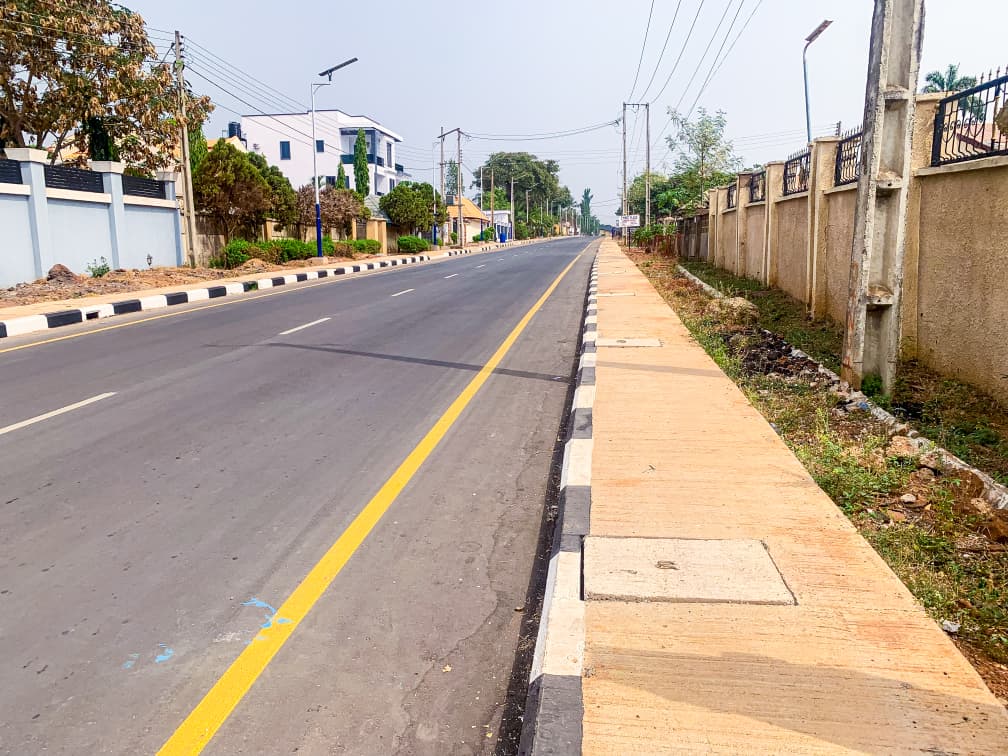
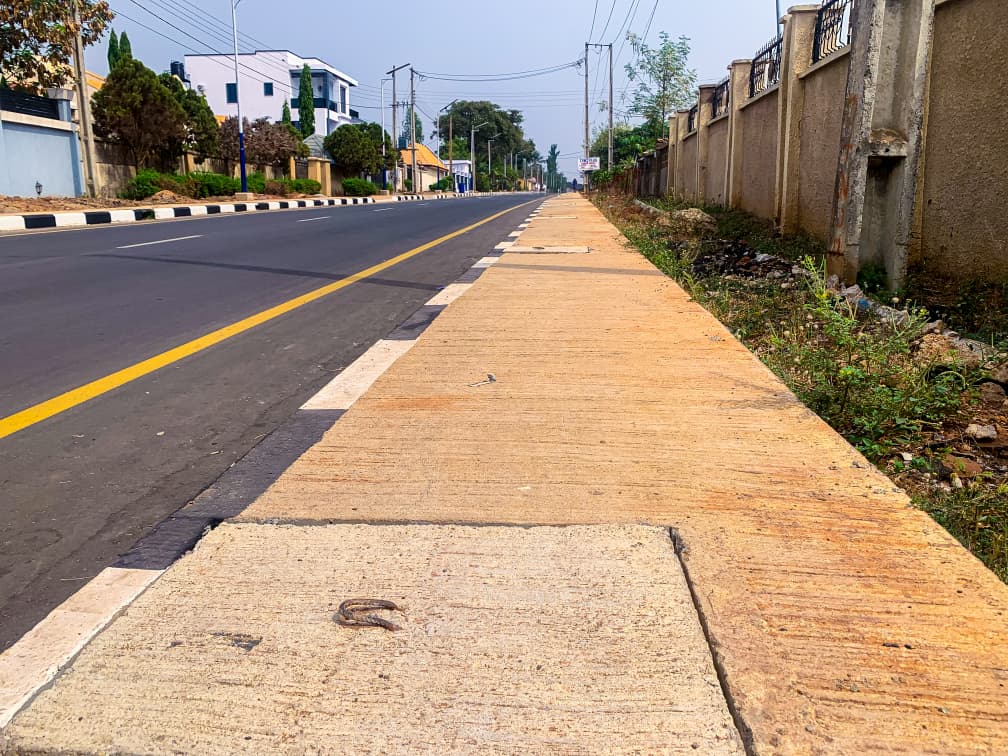
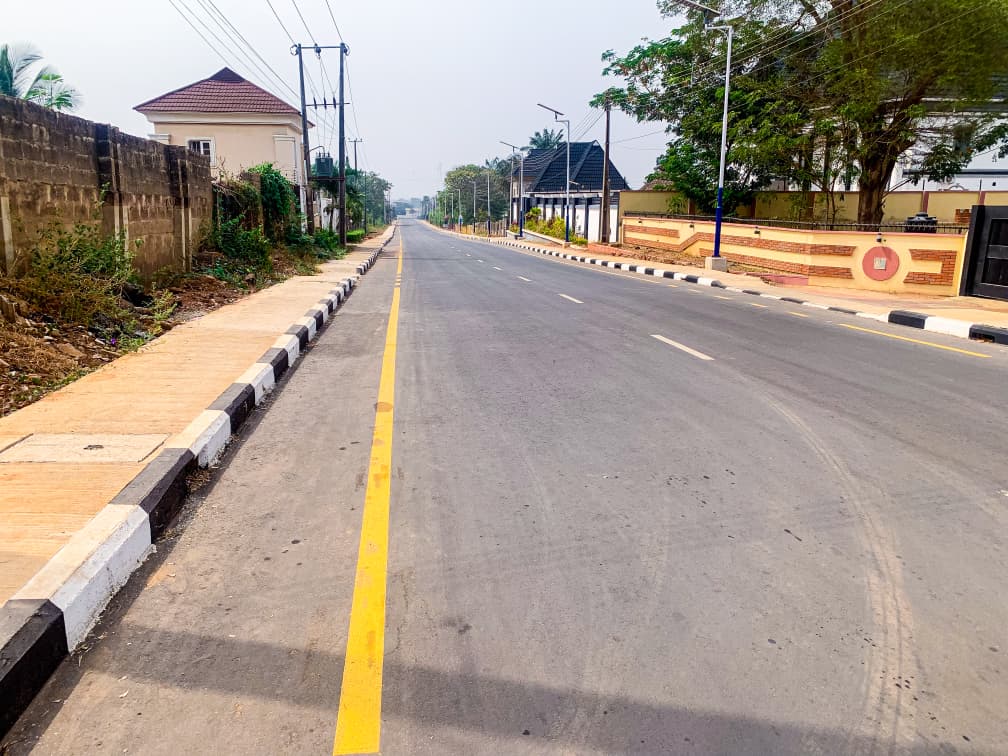
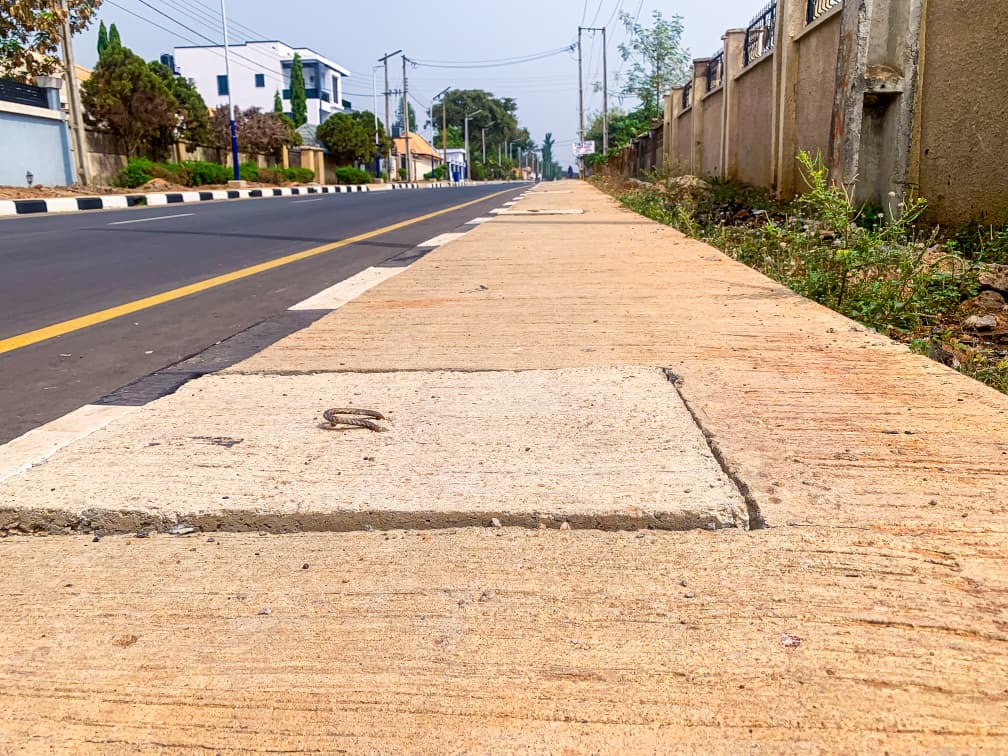
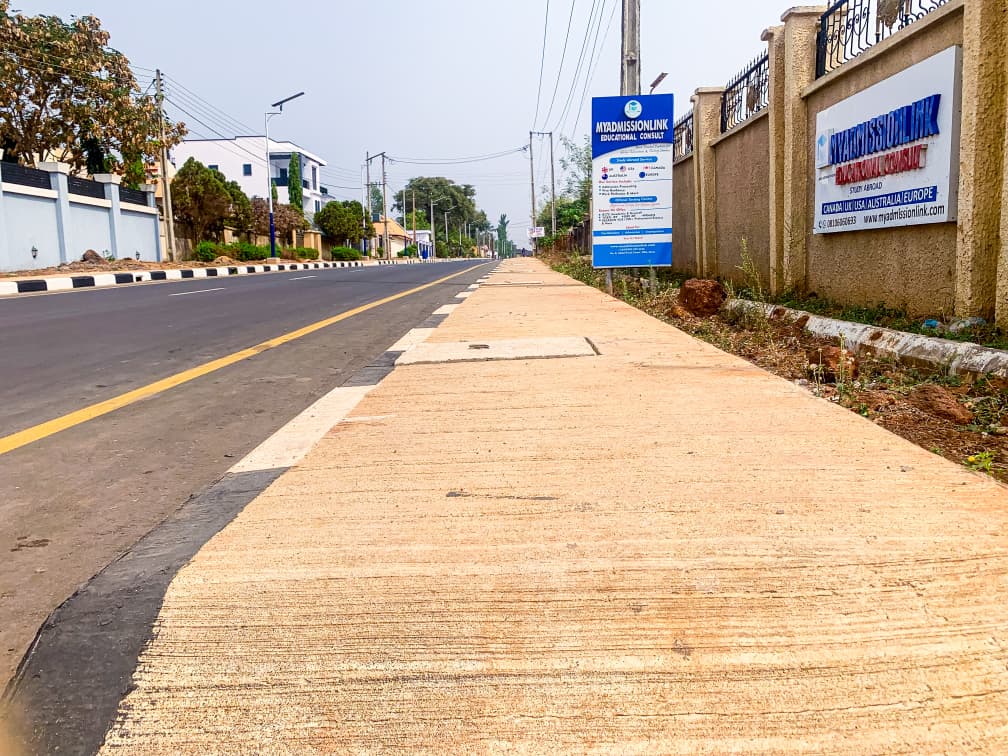
One of the important legacies of Governor AbdulRahman AbdulRazaq are the many walkways in every part of the capital city Ilorin. Beyond being pleasing aesthetics which set the new Ilorin apart from its old self, these walkways come with lifestyle change and numerous health benefits for everyone. They reduce incidents of vehicles hitting pedestrians, potentially causing injuries and deaths.
But equally significant is the platform for exercise that these beautiful walkways offer to all. We need to sit less, walk more, and reduce the sedentary lifestyle which experts blame for the many cardiovascular complications that we see everywhere. Ibn Khalidun, historian and social philosopher, in fact linked sedentary lifestyle to the fall of many civilisations. So, kudos to the Governor for the thoughtful addition to the infrastructure in the state. It is one of his many legacies that our children will inherit and carry to the future.
These walkways have been accompanied by upgraded roads in every part of the city and beyond, especially in Offa town. But this infrastructure is seriously threatened by our general habits as a people. As I walk through these walkways every other day or on weekends, I observed that the roads, the walkways, and the drainages can only survive if we change our habits as a people.
Along with relevant government agencies doing their bits, people need to intentionally stop littering footpaths or dropping wastes as they drive by. I observed that virtually all the water outlets built to the walkways on Offa Road, for instance, are heavily littered with water sachet, trash, and other things.
The durability of public infrastructure hangs on how well we handle them. Burning trash on the road or improper refuse dump through water outlets of the walkways is a dangerous practice. Often, the difference between the lifespan of our infrastructure and the ones in Europe or US is the habit of the populace. To keep our infrastructure good and durable, our mindset needs to change. It is our headache if roads or schools built in two years collapse owing to the devil-may-care attitude to facilities done with our money. Let us care a lot more. That begins from every home: let’s decide to drop all the habits that damage public infrastructure.
A duty to ourselves
A few weeks ago, we debated to no end how esteemed teachers and Professor Shehu Raheem Adaramaja, SUBEB chief, picked trash at Amule Elementary School in Ilorin East. Painfully, we ignored the main issue: a collective inability to maintain standards and ethics to the extent that we have normalised things that we shouldn’t have. A Primary 3 pupil, for context, should have the orientation that trash is meant for the bin and that it is simply unacceptable to throw garbage from a moving vehicle to the road. Such basic orientation, among other things, will save us many problems.
As part of education multiplier effects, I plead that we adopt concerted cultivation in child rearing to refocus the trajectory of our nation right from the homestead.
Finally…
My love for our teachers is unmistakable. And so does the Governor. They deserve every good thing that life has to offer. It is cheery, therefore, to have the Governor approve 27.5% Teachers Specific Allowance (TSA), a move the NUT has commended. For context: the approval of the 27.5% TSA (in this form) is a 2012 prayer answered in 2025. Our teachers deserve it.
But the best is the enemy of the good. In addition to the TSA, which is exclusive to them, my teacher-friends want to also get the 30% peculiar allowance approved for civil servants in the core service. My reading of this position is that they just want better pay. It is normal for humans to want more. But there is a problem with their saying they want to benefit from the peculiar allowance which, right from the Federal Government where it emanated from, is meant for certain categories of workers.
The Peculiar Allowance was designed by the former Head of Service of the Federation Dr. Yemi Esan and Minister of Labour and Productivity Dr. Chris Ngige as a policy instrument to bridge the gap between what workers in the parastatals and agencies earned and what the core civil servants earned. It is a salary harmonization policy.
These core civil servants do not earn TSA or CONMESS (for doctors) or CONHESS (for nurses), among other benefits, hence the peculiar allowance.
As genuine as the campaign for improved welfare of my teacher-friends is, I fear that the fight to earn peculiar allowance is risky for everyone. Workers in other sectors may well agitate for the same. And my teacher-friends risk losing their TSA to counter agitations of equality from elsewhere. What is sustainable in many human endeavours is equity, not equality.
Two points need to be made here. The approval of the 27.5% TSA will add roughly N1.3bn to the wage bill every month, effective January 2026. That’s around N15.6bn more annually. This already has its consequences for governance deliverables, especially at the local government level, because tradeoffs are now inevitable for them. The money for the TSA is a tradeoff for other things they will not be able to do in the new year. But I feel that our teachers deserve it.
Also, the approval of TSA, which is calculated based on the new minimum wage, still places teachers above those in the mainstream service even with their 30% peculiar allowance. For instance, a level 7 step 1 in the core service will now earn 99,978.65 after the 30%, whereas a level 7 step 1 TSA teacher will earn N101,623.94. And while Level 8 Step 1 TSA teachers will now earn N106,648.57, their counterpart in the core service will earn N103, 962. 38. The gap continues like that.
If the government acceded to my teacher-friends’ request to also earn peculiar allowance, it means that a level 7 step 1 TSA teacher would earn N132,111.12 — exactly N32, 132.47 more than their mate in the core service. This will further widen the gap the government had sought to reduce, defeat the whole essence of the peculiar allowance and wage harmonization policy, and trigger an unending service-wide civil war that will further destabilise the system. Stability is underrated.
Dear teachers, this administration cares for you, and this is glaring from the progress so far made in massive school infrastructure upgrade and your welfare: 345% outstanding salary arrears since 2016 paid up; prompt and full payment of salary; promotion arrears from 2017 fully implemented with 2025 already approved; disparity between TESCOM and SUBEB workers bridged; two new minimum wages implemented back to back; regular capacity building for SUBEB teachers since 2019; deductions of cooperatives restored; and annual incremental steps restored since the last three years — a first in many years.
The administration can only beat its own record and it always will because we do not doubt that you are a critical part of our journey. But let’s not trigger a civil war in the process. You always have the esteemed regards of this administration. Compliments of the season, everyone!