The argument for any governorship candidate must begin not with the candidate but with the state. What does Kwara State actually need from whoever occupies Government House in Ilorin after 2027? What are the honest deficits that a new governor must confront? What kind of leadership profile, not rhetoric, but demonstrated character and capacity, does the scale of that task require? It is only by answering those questions first that the case for any particular candidate acquires weight.
Kwara is a state of considerable promise and persistent underperformance before the tenure of Abdulrazaq Abdulrahaman. Its geography places it at the meeting point of the North and South, giving it natural advantages in trade, logistics, and cultural exchange that few Nigerian states enjoy. Its land is fertile. Its people are educated, entrepreneurial, and politically sophisticated. And yet, for much of its modern history, Kwara has been governed as a political estate rather than a developmental project, a state whose potential has been subordinated to the interests of political patrons rather than its citizens.
The current administration of Governor AbdulRahman AbdulRazaq has made credible progress in beginning to reverse that inheritance. Infrastructure is being delivered. The Ilorin International Conference Centre is taking shape. Governance has become more institutionalised. But the unfinished business is real and substantial.
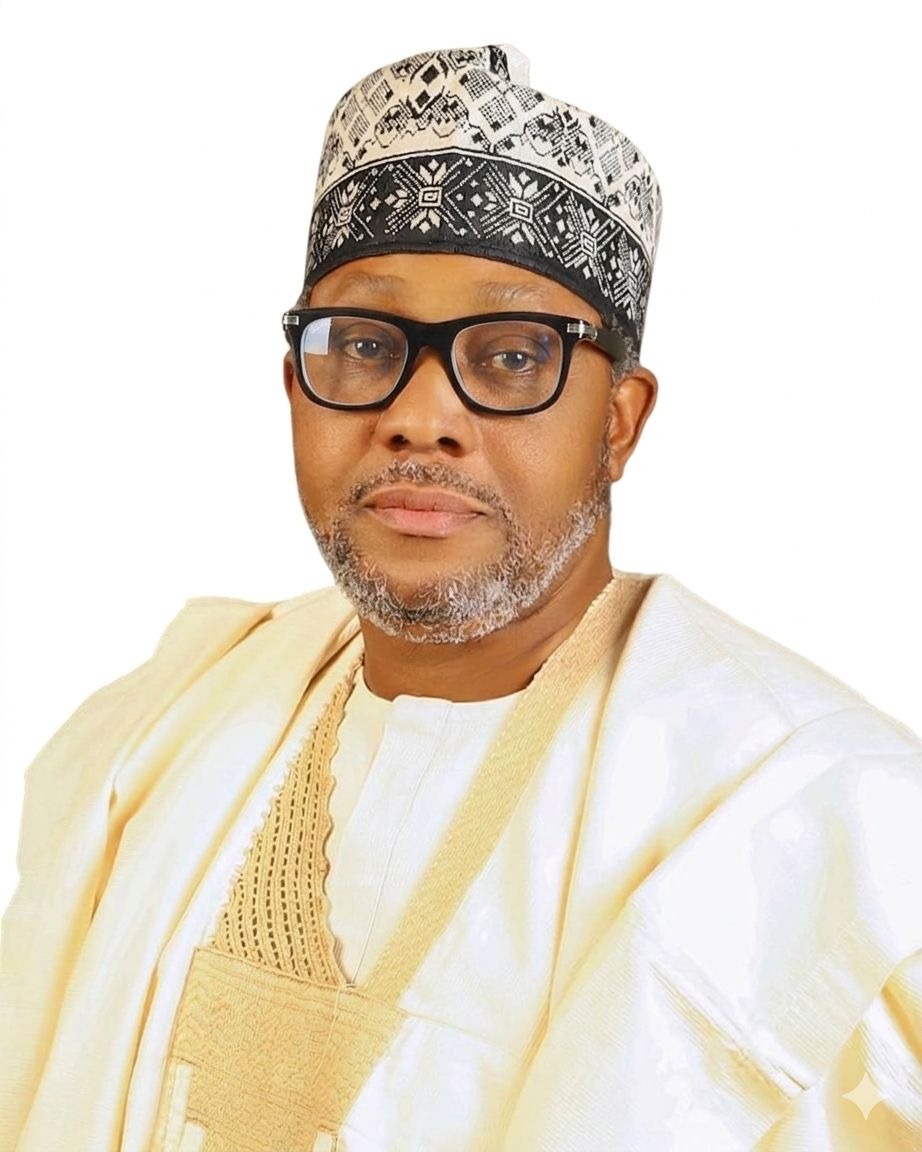
That is the context in which the candidacy of Engr. Femi Sanni, known widely and affectionately across Kwara as Araba, must be assessed. And when assessed honestly, the case is compelling.
A Builder Before a Politician
One of the most persistent problems in Nigerian governance is the elevation of people who have never built anything to positions where they are expected to build everything. Governors who have never run a business, managed a payroll, navigated a competitive market, or created a job from nothing are handed the levers of a state economy and expected to produce results. The outcomes of that experiment are visible across the country.
Araba Femi Sanni is a different kind of candidate. He is, before anything else, an engineer and an entrepreneur with over three decades of active enterprise behind him. His Stafolga Group spans telecommunications, construction, insurance, media, and strategic consulting. He chairs Flow FM 92.7 in Ilorin, a media institution that has become embedded in the cultural life of the state capital. He founded Africa’s first mobile phone repair assurance company, a pioneering solution that recognised a gap in consumer protection within the continent’s rapidly expanding technology market and moved to fill it. This is not a man who arrived at enterprise through inheritance or political patronage. It is a man who built, failed, learned, and built again across multiple industries over multiple decades.
That background matters enormously in the context of what Kwara needs. The state’s fundamental economic challenge is not administrative in nature. It is structural. Kwara produces talent but exports it. It sits on agricultural land but captures little of the value chain. It occupies a strategic location between Lagos and the North but has not institutionalised itself as a logistics or commercial hub. These are problems that require someone who thinks like an entrepreneur, who understands investment climates, who can hold a conversation with a foreign investor as an equal rather than as a supplicant. Araba’s career has prepared him precisely for those conversations.
He has also been explicit about the economic vision he intends to bring to the governorship. After returning from a Nigerian-UK business conference held alongside events marking President Tinubu’s visit to Britain, Araba spoke publicly about positioning Kwara as a hub for conference and business tourism. He pointed to an observable and measurable indicator: the growing frequency of same-day return flights between Lagos and Ilorin, which he reads as evidence of rising business traffic and increasing investor interest in the state. This is not the language of a politician making promises for the crowd. It is the language of someone who watches economic indicators, who attends international business gatherings, and who thinks systematically about how to convert latent advantage into active development.
Youth, Inclusion, and the Investment That Precedes Power
There is a category of political aspirant who discovers youth empowerment at the moment they decide to run for office. The youth agenda becomes a campaign tool, deployed strategically during the election season and forgotten the moment the ballot is counted. Kwara’s voters, particularly its younger voters, have seen that pattern before. They can tell the difference between a candidate who is performing interest in young people and one who has actually spent years investing in them.
Araba Femi Sanni’s record on youth development predates his governorship ambition by many years. Through Araba Football Club, he has provided a structured platform for young athletes to develop their talent, compete, and build the kind of discipline that sport uniquely instils. Through Flow FM 92.7, he has created employment and opportunity for young broadcasters, journalists, and media professionals who might otherwise have had to leave Kwara to find comparable platforms in Lagos or Abuja. He has spoken often about his father’s management of the defunct Tate and Lyle FC of Ilorin, a family heritage of investment in sporting communities that shaped his own philosophy. This is not performance. It is inheritance acted upon.
The response from Kwara’s youth has been telling. When the Kwara Youth for Good Governance coalition, drawing members from across all 16 local government areas of the state, gathered to endorse Araba’s candidacy, their convener, Salman Idris, was careful to frame it in terms that cut through the noise of ordinary political endorsements. He said the decision was based on evidence, not emotion. He described Araba as a candidate whose track record aligns with the expectations of a younger and more politically conscious demographic. Over 2,000 young people from across the state attended that event, arriving before the scheduled time and filling the Arca Santa event centre in Ilorin to affirm their support. That is not a crowd manufactured by money. That is a crowd manufactured by credibility.
Araba’s commitment to inclusion also extends beyond youth. He holds chieftaincy titles across multiple communities in Kwara, including Otun Maiyegun of Kishi, Otun Aare Soludero of Offa Land, and Gbobaniyi of Obbo-Aiyegunle. These are not honorary decorations. In the context of Kwara’s complex inter-community dynamics, they represent relationships of trust and recognition built over time across the state’s diverse geographies. When Araba says he entered this race after wide consultation across all three senatorial districts, the social architecture behind that claim is visible. He is not a candidate of one zone, one faction, or one interest bloc. He is a candidate whose networks, built through enterprise and community engagement rather than political calculation, span the breadth of the state.
Continuity with Acceleration: The Lagos Model Applied to Kwara
One of the most thoughtful arguments Araba has made in the public discourse around the 2027 succession is his invocation of what he calls the Lagos model. He argues, correctly, that the most durable political success story in contemporary Nigerian governance is not the one-off transformational governor who arrives, performs brilliantly, and leaves behind an administration that squanders his legacy. It is the system of governance continuity built in Lagos over successive APC administrations, where institutional progress compounds over time because each governor inherits and builds on the work of the one before, rather than dismantling it to make room for a personal brand.
Kwara is at a moment where this principle is directly applicable. Governor AbdulRazaq has laid what Araba himself has publicly described as a new benchmark for governance in the state. The challenge for the next governor is not to restart from scratch, which would squander momentum, but to take what has been built and move it to the next stage of ambition. Araba has been unambiguous about this: he sees his role as a consolidator and accelerator, not a revisionist. In a political culture where incoming governors often reflexively undo the work of their predecessors to establish identity, this posture is itself a form of maturity.
The acceleration Kwara requires is primarily economic. The state’s IGR must grow substantially to reduce the dangerous dependence on federal allocations that leaves every budget cycle vulnerable to the fluctuations of oil revenue. The conference and business tourism strategy Araba has outlined is one credible lever for this. Ilorin has geography, infrastructure investment under the current administration, and a social environment that makes it a realistic candidate for mid-tier conference hosting. The Ilorin International Conference Centre, when completed, will be an anchor asset. The question is whether the next governor will have the business acumen and international connectivity to fill that centre with paying delegates from the private sector, from professional associations, from international organisations. Araba, who personally attends Nigerian-UK business conferences and understands how investment decisions are made, is better equipped for that conversation than most.
His position on security also reflects the kind of thinking that goes beyond electoral platitude. When bandits attacked the Isapa community in Ekiti local government area of Kwara, Araba did not simply offer condolences and move on. He called directly for the acceleration of state police legislation, arguing that the federal security architecture is structurally inadequate for the granular, community-level threats that Kwara and other states now face. He said no community in Kwara should live under the constant threat of violence and fear, and he backed that statement with a policy prescription: constitutional and legal reform of the security architecture that gives states real capacity to protect their own people. This is a serious position, held by a serious man, and it distinguishes him from those who treat security as a backdrop for sympathy rather than a domain for governance innovation.
The Argument for Araba, Plainly Stated
Let this argument be made as plainly as possible for those who approach the 2027 Kwara governorship race without prior commitment to any candidate. The question is not who has the longest political biography or the most powerful godfather. The question is who is most likely to look back in 2031, after four years in office, and have genuinely moved the needle on the things that matter to ordinary Kwara people: jobs, roads, schools, hospitals, security, and a state that is attracting investment rather than exporting talent.
Araba Femi Sanni offers a profile that maps directly onto those requirements. He has built businesses across multiple sectors, which means he understands what entrepreneurs need from a state government: predictable regulation, infrastructure that works, and an administration that treats investors as partners rather than subjects. He has invested in youth development through sport and media for years before the first campaign billboard went up, which means his commitment to young people has been tested and demonstrated rather than merely declared. He has cultivated relationships across all three senatorial districts of Kwara through a combination of cultural recognition, community engagement, and consistent presence, which means a Sanni administration would not be the governorship of a faction but of the full state.
He also brings something that is harder to quantify but no less important: intellectual honesty about what governance requires. He has said publicly that leadership must be anchored on competence, a proven track record, integrity, and inclusiveness. He has invoked the Lagos succession model not as flattery toward President Tinubu but as a genuine framework for what durable state-level progress looks like. He has contested before, first for the House of Representatives in 2003 and later for the governorship in 2019, absorbing the defeats and continuing to participate in Kwara’s political life out of conviction rather than retreating in disappointment. The man has been tested by failure and continued anyway. That is not a small thing.
Kwara is not a state that can afford another cycle of governance by improvisation. It needs a governor who arrives on day one with a coherent economic strategy, a track record of building institutions rather than simply inhabiting them, and the personal relationships across the state’s communities to govern inclusively rather than sectionally. It needs someone who has already demonstrated, outside of government, the values they claim they will bring into it.
The neutrals who read this and ask what separates Araba Femi Sanni from the field deserve a direct answer. What separates him is that his credentials are not political. They are real. His businesses exist. His football club exists. His radio station exists. His workers draw salaries. His community relationships are documented in chieftaincy titles conferred by different peoples across different parts of Kwara. His international exposure is visible in where he goes and who he engages when he travels. You can test all of this independently of anything his campaign team will tell you.
Nigeria has a long and painful history of electing people who were impressive on paper and then watching them fail in office because the qualities required for political success turned out to have nothing to do with the qualities required for governance. The antidote to that pattern is not to abandon ambition but to select leaders whose pre-political lives actually demonstrate the capacities that governing demands. Araba Femi Sanni is that kind of candidate.
Kwara deserves a governor who built something before he sought to govern something. Who invested in its young people before he needed their votes. Who studied its economy and its position in the regional and national business landscape before he commissioned a campaign poster. Who has crossed the lines of zone, faith, and community through decades of genuine engagement rather than through a pre-election tour. Who came back from a trip abroad talking not about pleasantries exchanged with dignitaries but about the specific economic opportunities those conversations opened for his home state.
The 2027 election in Kwara is not yet decided. The field is not yet finalised. Many conversations remain to be had within the APC, within the broader political community, and among the people of the state. But the case for Araba is not merely a campaign argument. It is a governance argument. And governance arguments, properly made and properly heard, tend to hold their ground.
Kwara does not need another politician who wants to govern. It needs a builder who is ready to.
Leave a Reply