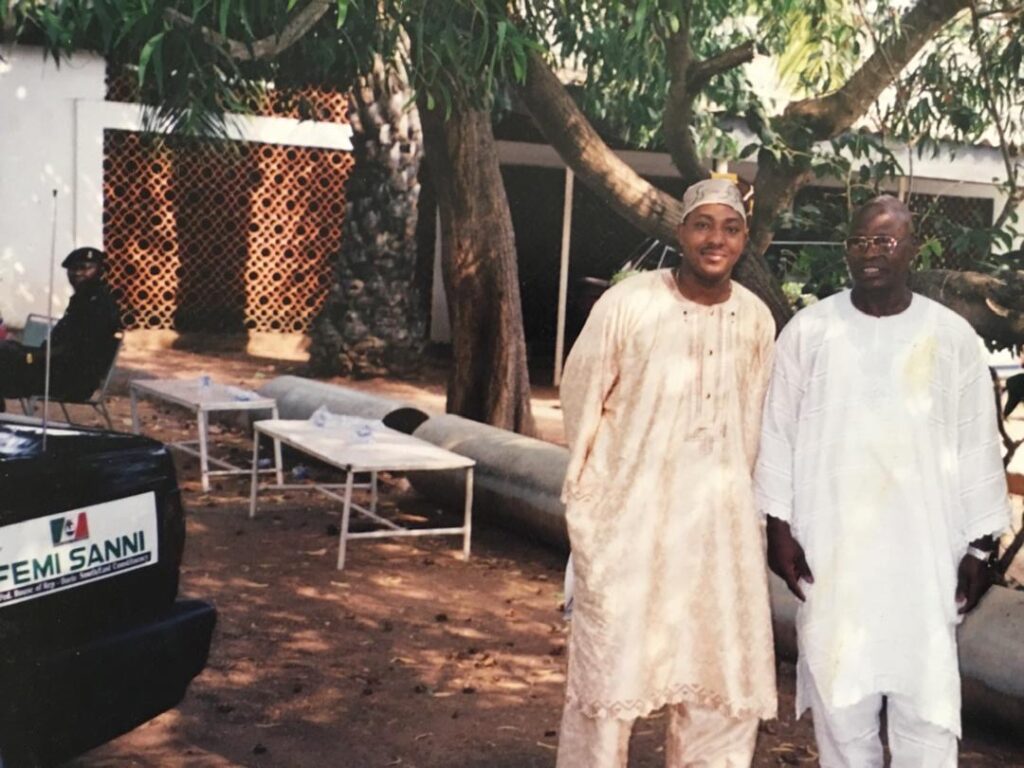
The political atmosphere in Kwara State is buzzing following the sudden resurfacing of archival photographs featuring Engr. Femi Sanni, popularly known as Araba — a development that is fast gaining traction across political circles and social media platforms.
What initially appeared as a nostalgic throwback has quickly evolved into a trending political conversation, with many observers saying the images may reshape ongoing narratives around leadership, legacy, and succession ahead of the 2027 governorship race.
At the heart of the discussion are powerful visual moments captured during the formative years of Nigeria’s progressive political movement. One of the widely circulated photographs shows Araba at a convergence of the defunct Alliance for Democracy (AD), a gathering regarded as a cornerstone in the evolution of modern progressive politics in the country.
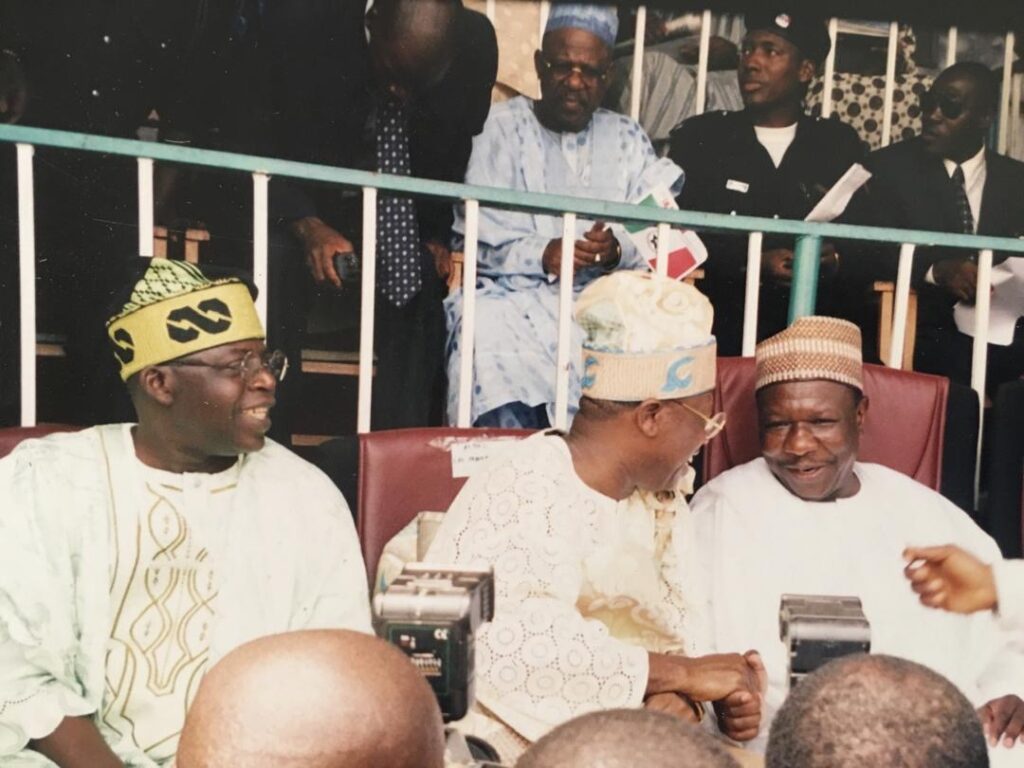
In the same frame is President Bola Ahmed Tinubu, seated among key figures of the movement.
However, what has drawn particular attention is not just Tinubu’s presence, but Araba’s visible positioning within the fold — not as a distant observer, but as an active participant in the political circle at the time.
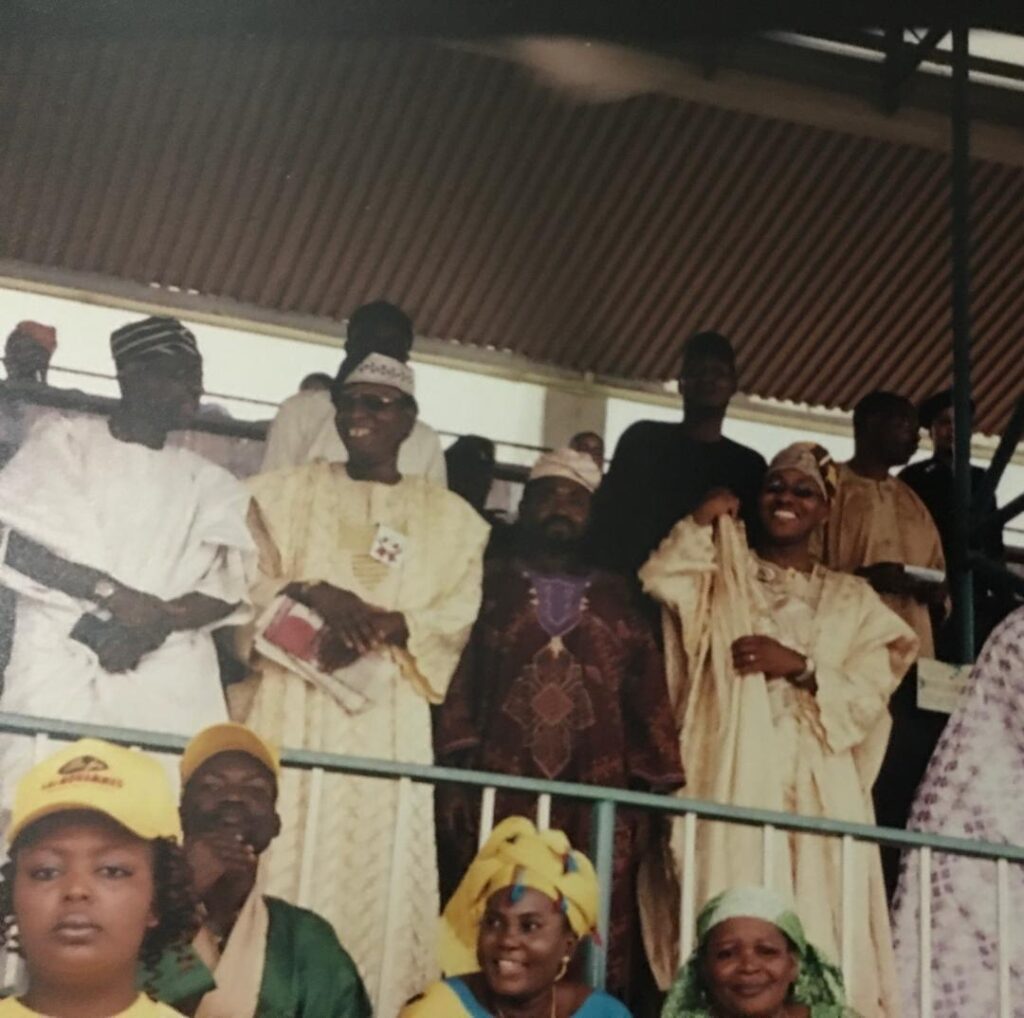
For many analysts, this image reinforces claims of his longstanding ties to the progressive bloc, long before current alignments began to take shape.
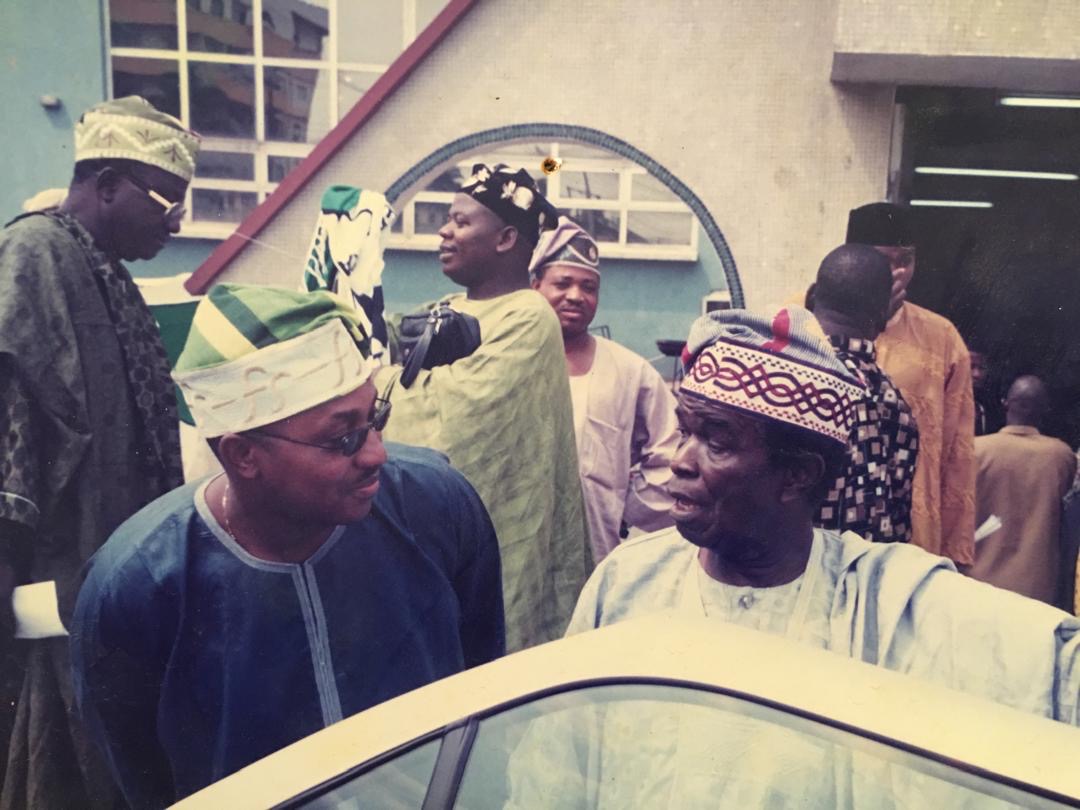
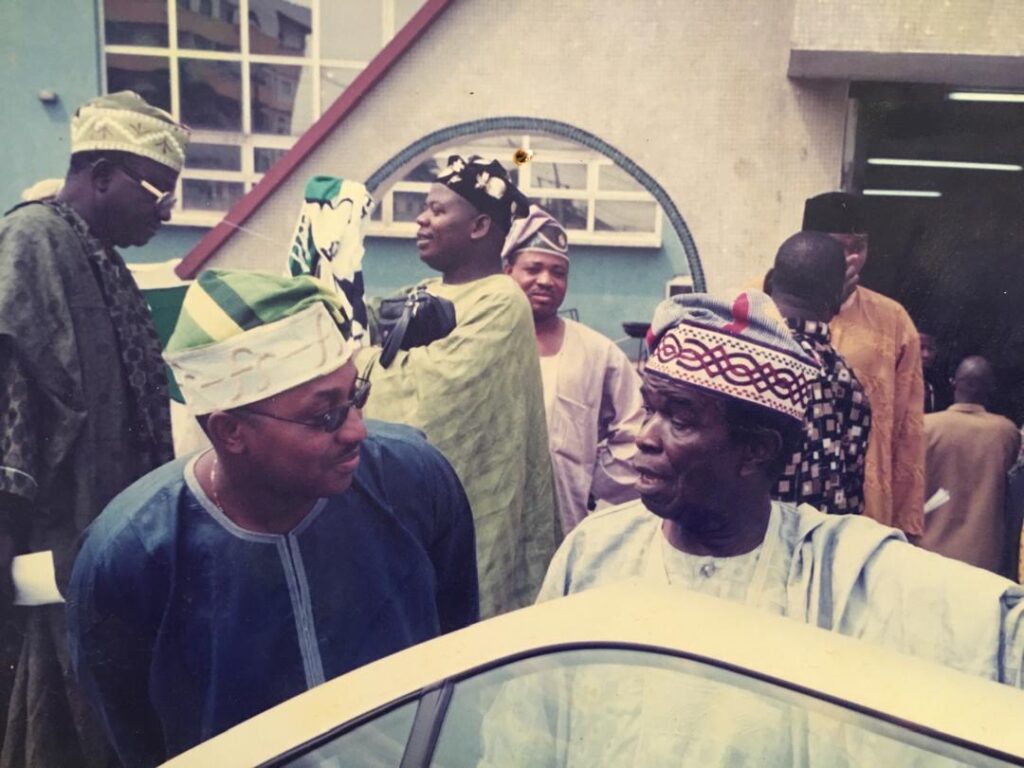
Another photograph fueling the conversation captures a younger Araba in close interaction with the late Abraham Adesanya, one of the most respected figures in Nigeria’s pro-democracy and progressive history.
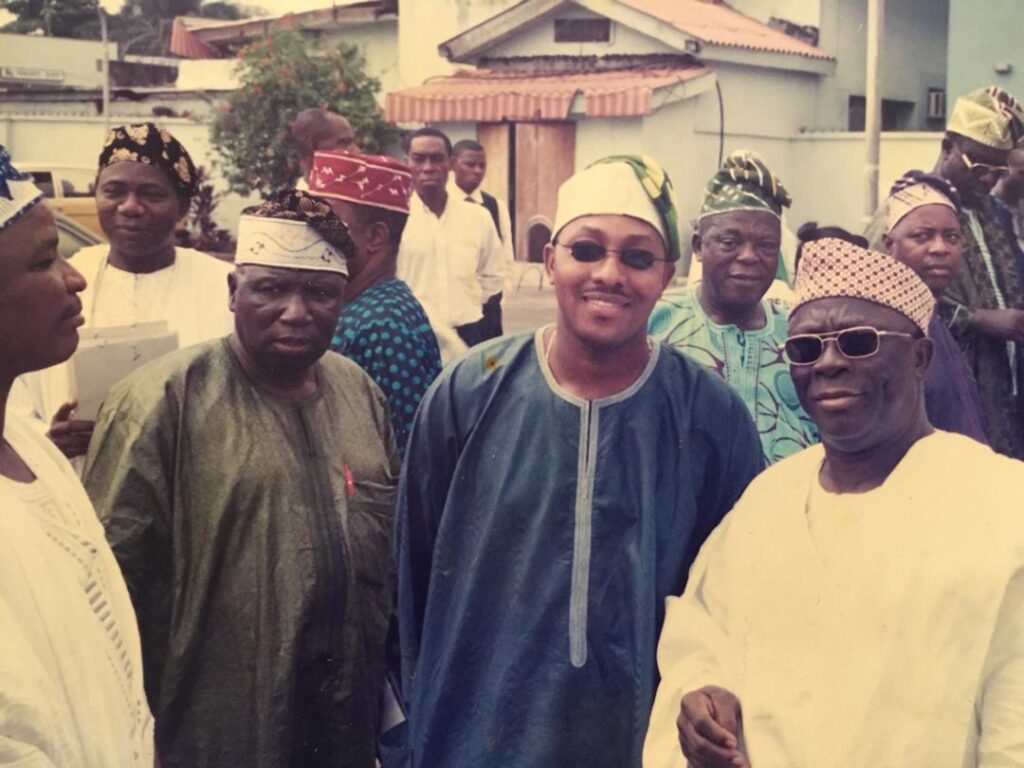
The image has been widely interpreted as evidence of ideological proximity and possible mentorship, further deepening arguments about Araba’s political pedigree.
Across Kwara’s political landscape, the images are being described as “quietly disruptive.” Without overt statements or direct political messaging, they appear to challenge existing assumptions about who holds authentic roots within the progressive tradition in the state.
Political watchers note that in an era where many aspirants are positioning themselves as torchbearers of that legacy, Araba’s resurfaced visual history introduces a different dimension to the conversation — one anchored in documented participation rather than recent political alignment.
“This is not about rhetoric; it’s about verifiable history,” a political analyst in Ilorin noted. “These images provide context, and context matters, especially when questions of credibility and continuity come into play.”
The development has also sparked wider debate about what truly defines belonging within a political tradition. Is it long-term involvement in foundational movements, personal interactions with ideological leaders, or present-day affiliations?
While no direct comparisons have been made, the implications of the trending images are not lost on politically engaged audiences. Many see them as subtly reframing the narrative ahead of what is expected to be a highly competitive 2027 governorship race in Kwara State.
As conversations continue to build online and within party structures, one thing is clear: the re-emergence of these photographs has injected fresh momentum into Kwara’s political discourse.
In a landscape where perception often shapes reality, Araba’s past — now vividly brought back into the spotlight — may prove to be a significant factor in the battles ahead.
And as the debate unfolds, one enduring political truth is once again reinforced: in politics, history is never truly in the past.
Leave a Reply